
More project photos (3)

The problem
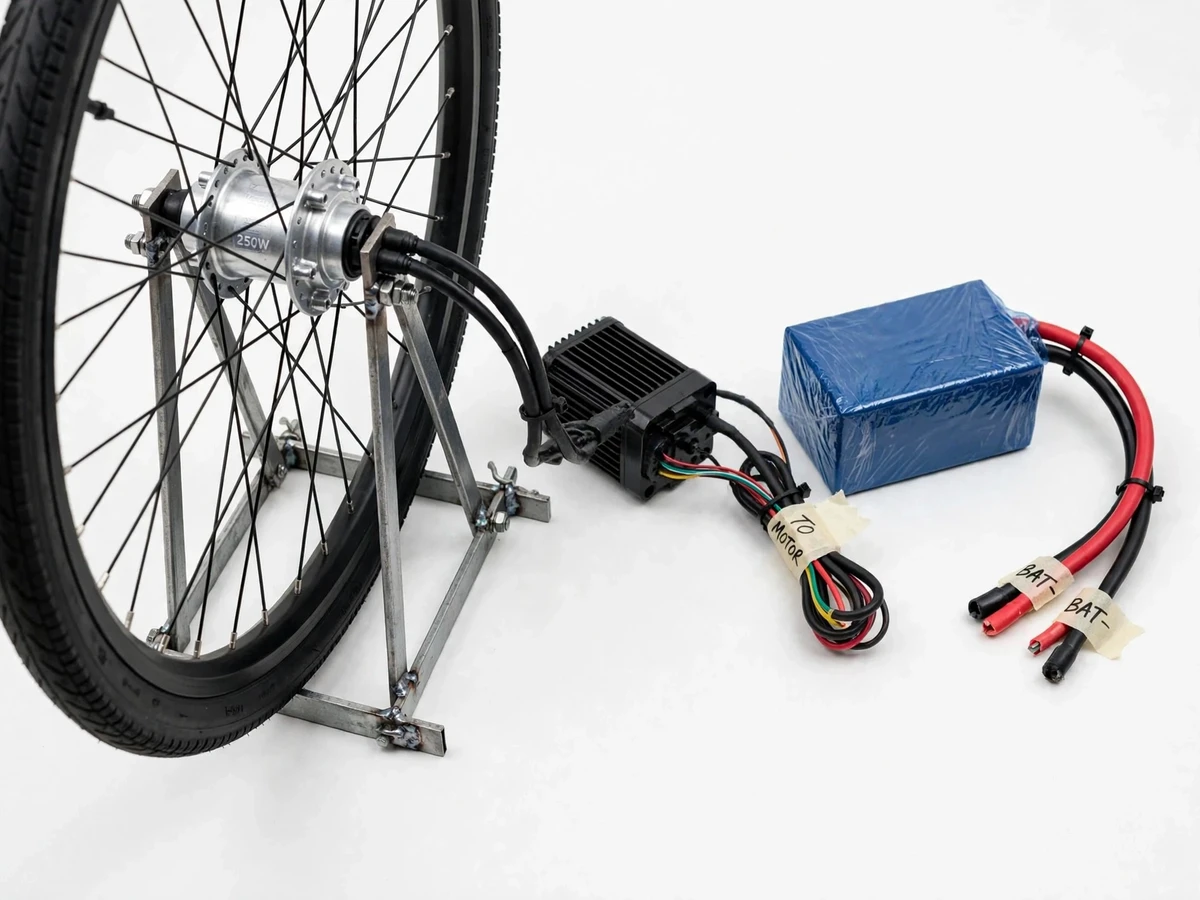
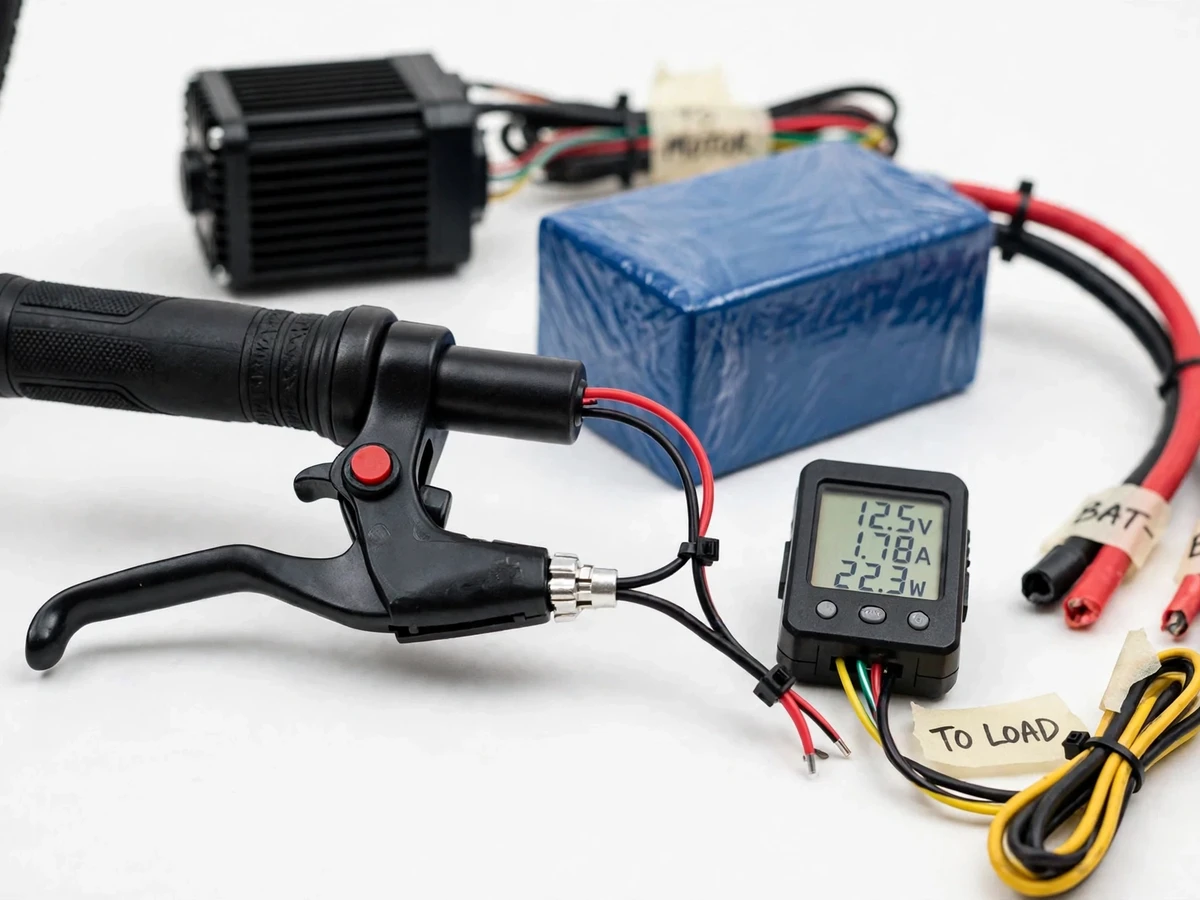
Cyclists discard energy at every stop: a rider braking from 20 km/h on a 90 kg rider-plus-bike converts over a thousand joules of kinetic energy into heat in the brake pads. Electric vehicles solve this with regenerative braking — the traction motor becomes a generator and pushes current back into the battery — but students rarely see the mechanism on hardware they built themselves. This project retrofits a 250 W hub motor, a regen-capable BLDC controller and a 36 V battery pack onto an ordinary bicycle, so every squeeze of the brake lever is an energy-recovery event. When you squeeze the lever, the controller switches the motor phases into a controlled regen path, turning wheel kinetic energy into charging current the battery can actually store — the EV mechanism, at student scale. A handlebar wattmeter shows regen current, voltage and cumulative watt-hours live, and the student runs braking tests with regen on and off to report the recovery percentage of their own build — measured data, not brochure claims.
How it works
- The 36 V battery feeds the regen-capable BLDC controller, which drives the 250 W hub motor as a conventional e-bike at up to approximately 25 km/h (typical, design target).
- When the rider squeezes a brake lever, the hall sensor fires: the controller instantly cuts drive power and switches the driver into regen mode.
- The bicycle's kinetic energy keeps the wheel spinning the hub motor, which now acts as a generator; the controller rectifies the motor phase outputs through the MOSFET body diodes into DC.
- Recovered current — limited to a programmable 8 A regen limit (design target) — flows back into the 36 V battery, but only when the battery voltage sits below the full-charge cutoff; the BMS gate refuses regen into a full pack.
- If the rider keeps squeezing, the mechanical brake pads engage as usual — electrical recovery absorbs the first part of every stop, friction handles the rest.
- The wattmeter logs battery voltage, regen current and cumulative watt-hours; the student compares stops with regen on and off to compute the recovery percentage for the report.
Tech stack:
- 250 W BLDC hub motor · 36 V (laced into 26-inch wheel)
- 36 V BLDC controller with regen firmware
- 36 V Li-ion battery pack · 10.4 Ah with BMS (design target)
- Hall-sensor brake levers with regen cut-off
- Handlebar digital wattmeter (V · A · Wh)
- Donor bicycle, 26-inch frame (typical)
- Fabricated steel torque arm and controller bracket
- Anderson-style connector wiring harness
| Parameter | Value |
|---|---|
| Motor | 250 W BLDC hub motor, 36 V (design target) |
| Battery | 36 V Li-ion, 10.4 Ah, with BMS (design target) |
| Regen current limit | 8 A, programmable (design target) |
| Full-charge cutoff | 42 V, BMS gate refuses regen above it (datasheet value, typical) |
| Assist top speed | Approximately 25 km/h (design target, typical) |
| Kinetic energy per 20 km/h stop | Approximately 0.39 Wh for a 90 kg rider + bike (physics, first principles) |
| Regen recovery fraction | 40–60% of braking energy (design target, to be measured) |
| Cumulative recovery, typical commute | Approximately 6–10 Wh over 30 stops (expected) |
| Regen effective above | Approximately 8 km/h wheel speed (design target) |
| Added mass | Approximately 12 kg of motor, battery and hardware (approximate) |
| Torque arm | 10 mm hardened-steel plate (fabrication spec) |
| Wheel / frame | 26-inch, donor bicycle (typical) |
Project features
- [Hub-motor regen drive] A 250 W, 36 V BLDC hub motor laced into a 26-inch (typical) rear wheel; it drives the bike as a motor and becomes a generator whenever the wheel overruns it — the core of the energy-recovery loop.
- [Regen-trigger brake levers] Brake levers fitted with hall sensors: a light squeeze engages regen and cuts motor power before the mechanical pads bite, so electrical recovery always happens first.
- [Regen-capable BLDC controller] 36 V controller with firmware regen mode; on trigger it switches the driver from drive PWM to a rectified regen path with a programmable current limit, pushing recovered energy into the battery.
- [Charge-protected battery pack] 36 V Li-ion pack with a BMS that gates regen charging above the full-charge cutoff — bench-tested, so a mid-brake charge cut-off can never leave regen current with nowhere to go.
- [Live recovery wattmeter] Handlebar-mounted wattmeter showing regen current (A), battery voltage (V) and cumulative recovered energy (Wh) in real time — the visible proof the demonstration depends on.
- [Fabricated torque arm and mounts] A 10 mm hardened-steel torque arm and controller bracket: the first 6 mm mild-steel bracket twisted under hard regen on the test bench, so the build spec was corrected before delivery.
- [Optional pedal-assist integration] Optional PAS sensor that adds motor assist while pedaling and automatically releases regen priority when pedaling stops — a clearly separated optional module, not part of the base build.
What is included
- Bicycle retrofitted with 250 W hub motor, regen controller and 36 V battery pack
- Handlebar wattmeter with regen energy logging
- Fabricated torque arm, controller bracket and wiring harness
- Regen-mode controller configuration with battery-full gating parameters
- Coast-down and braking test procedure with data-recording template
- Project report PDF (regen theory, controller working, test data, recovery calculations)
- PPT presentation for final review
- Viva Q&A preparation document (BLDC regen, back-EMF, battery charging safety)
Limitations & prerequisites
- Regen only recovers braking energy — it cannot recharge the battery at standstill, and one stop from 20 km/h holds under half a watt-hour to begin with.
- Regen charging is refused when the battery is full; at 100% charge every stop is friction-only.
- Below approximately 8 km/h (design target) back-EMF is too low to push meaningful current — slow-speed stops are friction-only.
- The build adds approximately 12 kg of motor, battery and hardware — handling changes noticeably.
- Real recovery depends on rider weight, speed and braking style; the 40–60% fraction is a design target to be measured, not a guarantee.
- This is a teaching retrofit, not a road-legal e-bike homologation — check local regulations before riding on public roads.
Frequently Asked Questions
How does regenerative braking actually work on a bicycle?
When you squeeze the brake lever, the controller cuts drive power and lets the still-spinning wheel drive the hub motor as a generator. The controller rectifies the motor's phase outputs into DC and pushes the current back into the battery — wheel kinetic energy becomes stored charge instead of heat in the brake pads. The wattmeter shows this happening live in amps and watt-hours.
How much energy does it really recover?
Honestly: one stop from 20 km/h (rider + bike approx. 90 kg) holds about 0.39 Wh of kinetic energy — physics, not marketing. The design target is to recover 40–60% of that; over a commute with 30 stops that totals roughly 6–10 Wh (expected). The test template has you measure your own numbers with the wattmeter, so the report states measured recovery, not claimed recovery.
What happens when the battery is already full?
The BMS gates regen charging above the full-charge cutoff voltage. If the pack is full, the charge stage disconnects — and on the test bench this once left regen current with nowhere to go, so regen is gated on a battery-not-full flag in the controller configuration. At 100% charge, braking is friction-only, exactly like an ordinary bicycle.
Does it need any special bicycle?
No. The build uses a donor bicycle with a 26-inch (typical) frame; the hub motor is laced into a 26-inch rear wheel, the battery mounts on the frame triangle, and the controller sits in a fabricated bracket under the saddle. A 10 mm hardened-steel torque arm reacts the motor's axle torque — the bracket drawing comes with the kit.
Is this project suitable for a final-year project?
Yes — for Mechanical and Electrical programs. It combines vehicle dynamics (braking energy), electrical machines (BLDC generator mode), power electronics (regen controller) and battery safety (BMS gating) in one build you can actually demonstrate.
Components & software requirements
- 250 W BLDC hub motor · 36 V (laced into 26-inch wheel)
- 36 V BLDC controller with regen firmware
- 36 V Li-ion battery pack · 10.4 Ah with BMS (design target)
- Hall-sensor brake levers with regen cut-off
- Handlebar digital wattmeter (V · A · Wh)
- Donor bicycle, 26-inch frame (typical)
- Fabricated steel torque arm and controller bracket
- Anderson-style connector wiring harness
Delivery information
Built-to-order project. Delivery timeline is shared after order confirmation based on current queue.
Support terms
Complete documentation, setup guide, and viva preparation included. Support for setup and explanation provided.
Download free synopsis (PDF)
Enter your name and WhatsApp number — the synopsis PDF downloads immediately. We may send occasional project updates on WhatsApp; no spam.