
More project photos (2)
The problem
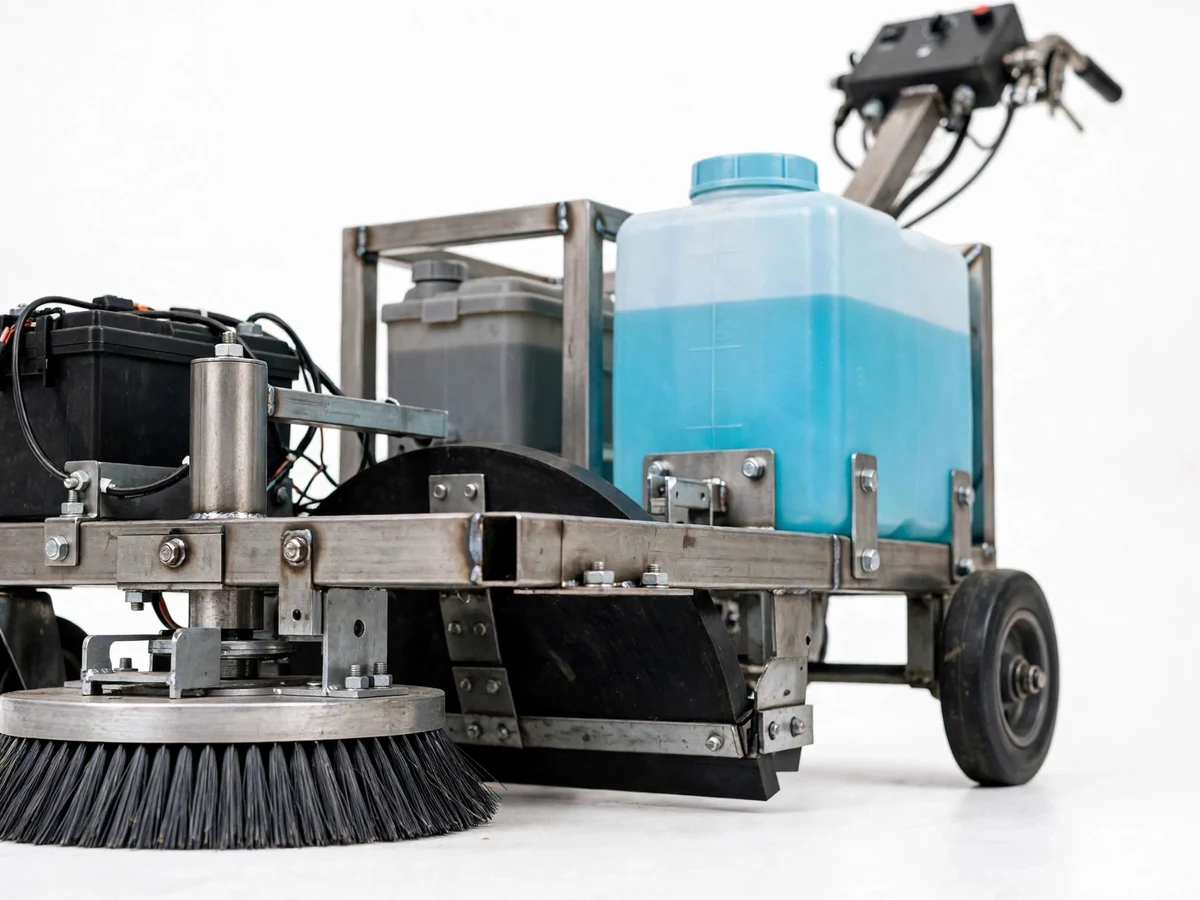
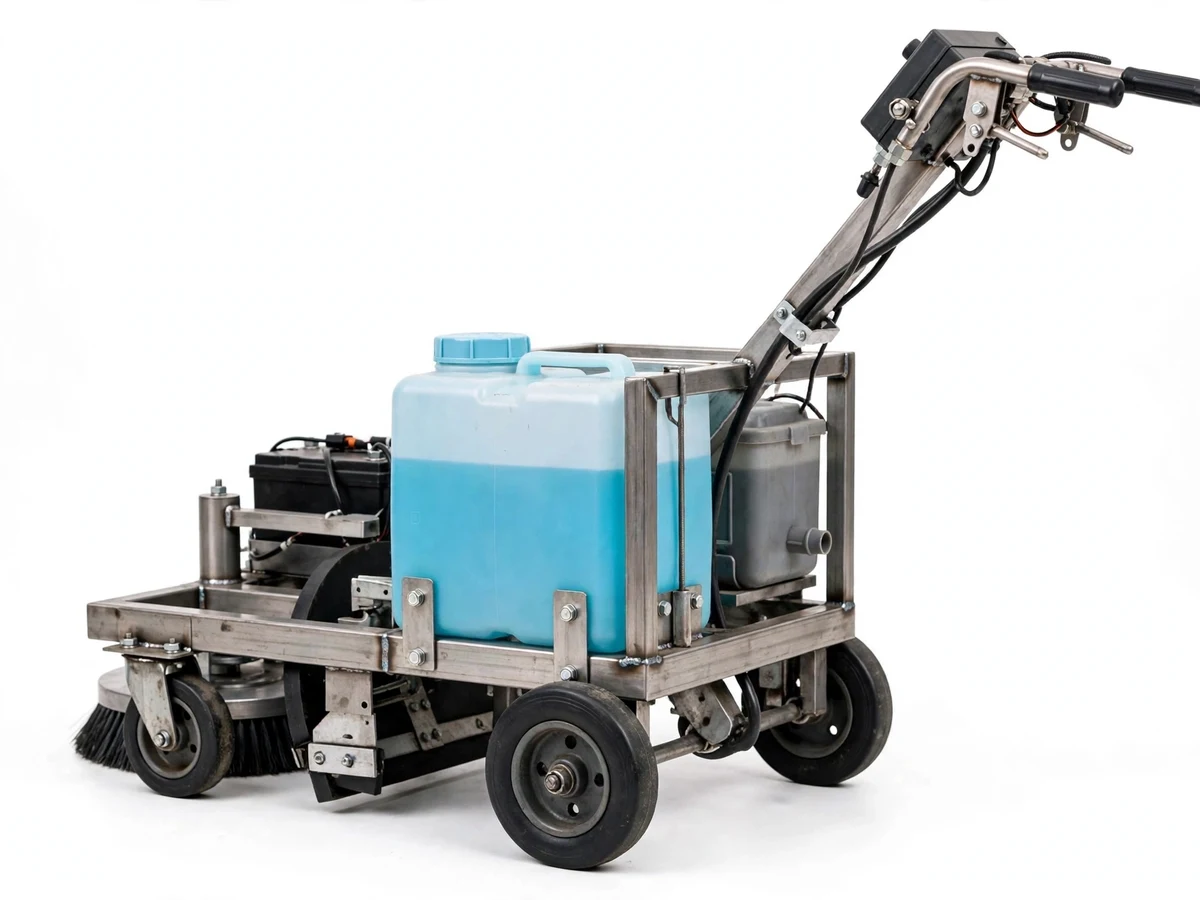
An automatic floor scrubber machine with a water tank and brush drive is a walk-behind cleaning machine that washes, scrubs and dries a hard indoor floor in one pass. The automatic floor scrubber machine carries its own clean water, applies it to the floor, scrubs with a rotating disc brush, and then collects the dirty water with a squeegee and vacuum into a recovery tank, so the floor is left damp rather than wet. The operator walks behind the machine and steers it with a handle, switching brush, water feed and vacuum from a control panel. Because wash water and recovered dirty water travel in separate tanks, dirty water is never spread back over a cleaned area. The machine suits smooth indoor surfaces such as tiles, polished concrete, marble and epoxy-coated floors in corridors, classrooms, workshops and shops, where a mop and bucket would be slow, leave streaks and keep the floor wet for a long time.
Manual floor cleaning with a mop and bucket has a basic flaw: the same water that picks up dirt is wrung back over the floor, and the floor stays wet until it air-dries, which is a slip risk in busy corridors. Large indoor areas also take a long time to mop by hand, and the result depends heavily on the effort of the person doing it. This project answers that problem with a small machine that separates the clean and dirty water, scrubs mechanically instead of by hand, and picks the dirty water up immediately, so each pass leaves a cleaner and drier surface than a mop pass.
Tank feeds solution to the brush head.
Follow the working sequence
How it works
The automatic floor scrubber machine cleans in a fixed sequence that runs from the clean-water tank to the recovery tank in a single operator pass. The operator fills the clean-water tank, switches on the water feed, brush and vacuum from the handle, and pushes the machine forward at walking pace. Solution flows onto the floor just ahead of the rotating disc brush, the brush scrubs the wetted surface loose, and the squeegee behind the brush gathers the dirty liquid so the vacuum can lift it into the recovery tank. Because the stages sit in a line along the direction of travel, every strip of floor is washed, scrubbed and vacuumed before the machine moves on. When the clean tank empties or the recovery tank fills, the operator stops, empties the recovery tank, refills the clean tank, and continues.
- The operator fills the clean-water tank with water and a small amount of floor-cleaning solution, then checks that the recovery tank is empty and the battery is charged.
- From the handle panel, the operator switches on the water feed valve so solution flows down to the brush head area.
- The brush motor starts and spins the disc brush against the floor, scrubbing the wetted strip as the operator pushes the machine forward at walking pace.
- The rotating brush loosens dust and stuck dirt from the floor surface while the fresh solution keeps the working area wet.
- The rubber squeegee blade trailing behind the brush presses lightly on the floor and funnels the dirty water toward the centre of the machine.
- The vacuum unit draws the gathered dirty water through a hose into the recovery tank, leaving the cleaned strip damp rather than wet.
- At the end of a run, the operator switches off the brush, water and vacuum, empties the recovery tank, rinses the brush and squeegee, and recharges the battery before the next session.
Builder note: the squeegee is set slightly wider than the brush path and angled so its two ends trail behind its centre, which funnels dirty water toward the middle vacuum pickup instead of letting it escape at the sides. The brush head sits ahead of the squeegee with a small gap between them, giving the solution a moment to soften dirt before the squeegee collects it. This geometry is the reason the machine can leave a strip dry enough to walk on shortly after a pass, rather than pushing a wave of dirty water ahead of itself.
Tech stack:
- DC geared motor brush drive
- 12 V battery pack with charger
- Vacuum recovery unit with hose
- Rubber squeegee blade assembly
- Steel-tube welded frame
- Clean-water and recovery tanks
- Handle-mounted switch panel
- PVC and hose plumbing fittings
| Parameter | Value |
|---|---|
| Machine type | Walk-behind · operator-pushed |
| Clean-water tank | Approximately 20 L capacity (design target) |
| Recovery tank | Approximately 15 L capacity (design target) |
| Cleaning width | Approximately 400 mm (design target · single disc brush) |
| Brush speed | Approximately 150 rpm (design target) |
| Brush drive | DC geared motor · 12 V supply (design value) |
| Power supply | 12 V rechargeable battery pack (nominal · design value) |
| Runtime | Approximately 60–90 min per charge (design target) |
| Machine weight | Approximately 35–45 kg (design target) |
| Floor types | Tiles · polished concrete · marble · epoxy-coated floors |
| Design-target coverage | 0.40 m width × 0.50 m/s walking speed × 3,600 s = 720 m² per hour before turns and tank refills (design-target calculation · not a measured result) |
| Control | Brush · water · vacuum switches on the handle panel |
Project features
The automatic floor scrubber machine combines four capabilities that together make one-pass cleaning work: a rotating disc brush that scrubs mechanically, a clean-water tank that feeds solution only where the brush is working, a squeegee and vacuum stage that recovers the dirty water at once, and battery power that frees the machine from a mains cable while it moves around a room. The operator controls all of these from the push handle, so starting, stopping and steering stay simple during a cleaning pass. The frame, tanks and brush head are sized for indoor use, so the machine fits through standard doorways and turns in corridors and classrooms. Each feature below is part of the base build, and anything that can be added later is marked separately at the end of the section.
- [Rotating disc brush drive] A DC geared motor spins a single disc brush against the floor, giving steady mechanical scrubbing that does not depend on how hard the operator pushes. Brush speed is set by the motor and drive selection, and the brush plate can be removed for cleaning or replacement.
- [Separate clean-water tank] A translucent tank on the frame holds the wash solution and feeds it to the brush head through a valve, so the operator can see the remaining level at a glance. Keeping wash water in its own tank means fresh solution reaches the floor on every pass.
- [Squeegee and vacuum recovery] A rubber squeegee blade behind the brush gathers the dirty water into a line, and a small vacuum unit lifts it into a separate recovery tank. The floor is left damp rather than wet, and dirty water is never returned to the cleaned surface.
- [Battery-powered operation] A rechargeable battery pack powers the brush motor and the vacuum unit, so the machine works away from wall sockets and across open floor areas. Charging uses a standard charger between cleaning sessions.
- [Operator handle controls] A push handle carries switches for the brush, water feed and vacuum, letting the operator start and stop each stage without bending down to the frame. The handle angle suits a walking operator steering through doorways and around furniture.
- [Adjustable water feed] A valve on the clean-water line lets the operator increase the flow on heavily soiled patches and reduce it on lightly soiled floors. This is a configurable feature of the base build, adjusted by hand during use.
- [Sturdy steel frame and wheels] A welded steel-tube frame carries the tanks, battery, brush head and squeegee, with wheels sized for smooth indoor floors. The frame layout keeps the heavy battery low, which helps stability while turning.
Optional customization: a larger tank set, a second brush head, or a detergent dosing valve can be developed on request. Future scope: self-propelled drive and automatic water-level sensing are not part of the base build and are listed as future improvements only.
What is included
- Working walk-behind floor scrubber prototype
- Wiring diagram and component list with part ratings
- Operating instructions for filling, cleaning runs and emptying tanks
- Project report covering design, fabrication, working and limitations
- Project abstract PDF
- PPT presentation for final review
- Demonstration guidance for a floor-cleaning trial
Limitations & prerequisites
- Built for smooth indoor hard floors only; rough, broken or heavily uneven surfaces reduce brush contact and recovery.
- The recovery tank holds approximately 15 L (design target), so long cleaning sessions need planned stops to empty it.
- Runtime of approximately 60–90 min per charge (design target) varies with brush load, floor condition and vacuum use.
- The machine is operator-pushed and has no self-propulsion motor, so large areas still need walking effort.
- Detergent choice matters: harsh chemicals can damage the tanks, hoses and squeegee rubber over time.
- The prototype is an academic build, not a certified commercial cleaning machine, and its performance figures are design targets, not measured results.
Frequently Asked Questions
What does the machine do in a single pass?
In one forward pass it lays down clean water, scrubs the floor with a rotating disc brush, and vacuums the dirty water up through a rear squeegee into a separate recovery tank, leaving the strip damp rather than wet. The three stages sit in a line along travel, so each strip is washed, scrubbed and dried before the machine moves on, with no second pass for normal indoor dirt.
Which motor drives the brush?
A DC geared motor drives the single disc brush, chosen because gear reduction gives the brush steady torque at a low, controllable speed from a 12 V battery supply. The geared drive keeps the brush turning at a near-constant rate even when it meets a heavily soiled patch, whereas a direct high-speed motor would slow down or stall under the same load.
Which floors can it clean, and which can it not?
It is designed for smooth indoor hard floors such as tiles, polished concrete, marble and epoxy-coated surfaces, where the brush and squeegee can keep even contact. It is not suited to carpets, rough outdoor concrete, gravel or broken floors, because the squeegee cannot seal against those surfaces and the vacuum recovery would leave dirty water behind.
How long does it run on one charge?
The design target is approximately 60–90 min of cleaning per charge, depending on brush load, floor condition and how much the vacuum unit is used. Heavily soiled floors draw more brush current and shorten the run, while light cleaning extends it, so the figure is a planning estimate and the actual runtime for a built unit should be checked during its first cleaning trials.
Can the machine be customized?
Yes, realistic options include a larger tank set, a second brush head, a detergent dosing valve, or a wider squeegee for open halls. Each change affects weight, battery load and turning size, so it is sized during the build rather than bolted on afterwards, and options that need a different frame or drive system are quoted as separate work.
Is this project suitable for a final-year project?
Yes, it fits Mechanical Engineering final-year work because it combines machine design, fabrication, drive selection, fluid handling and testing in one build. It gives a team a working prototype to demonstrate, measurable design choices to defend, and clear limitations to discuss, covering the design, manufacturing and evaluation parts of a final-year submission.
Components & software requirements
- DC geared motor brush drive
- 12 V battery pack with charger
- Vacuum recovery unit with hose
- Rubber squeegee blade assembly
- Steel-tube welded frame
- Clean-water and recovery tanks
- Handle-mounted switch panel
- PVC and hose plumbing fittings
Delivery information
Built-to-order project. Delivery timeline is shared after order confirmation based on current queue.
Support terms
Complete documentation, setup guide, and viva preparation included. Support for setup and explanation provided.
Download free synopsis (PDF)
Enter your name and WhatsApp number — the synopsis PDF downloads immediately. We may send occasional project updates on WhatsApp; no spam.