More kit photos (2)
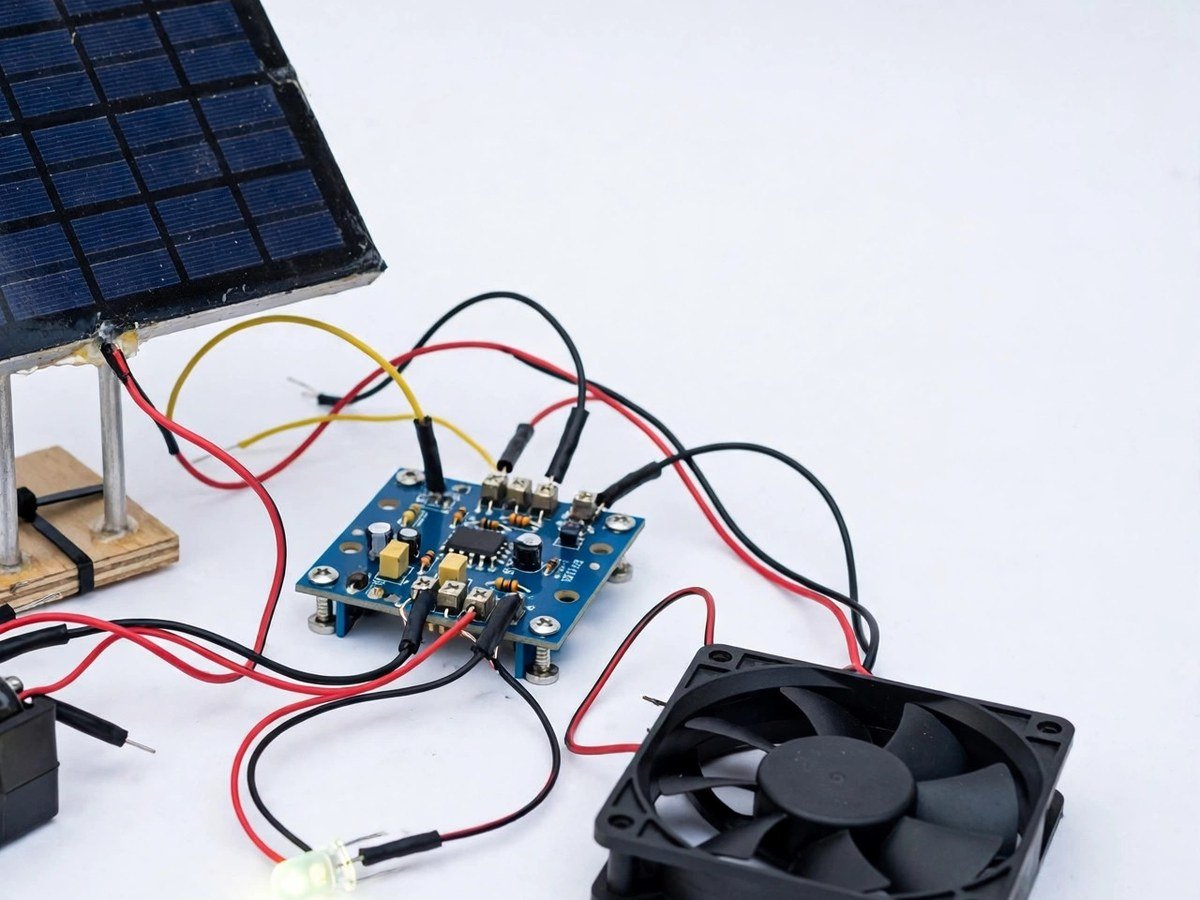
Build time: 60 minutes · Soldering: No
The Problem
Solar energy is easy to slogan and hard to understand, because the key facts are invisible: shade kills output, angle matters, and stored energy runs out. A textbook panel diagram shows none of that. This kit makes all three visible in one period, with no code and no computer lab, which is exactly why it suits schools without a lab. The class measures sun versus shade, tilts the panel, and times how long the stored charge runs a fan. After that, claims about solar power stop being slogans and start being numbers the class measured itself. That is the point of a no-code kit: it removes the programming barrier and leaves the physics in front of the students.
How It Works
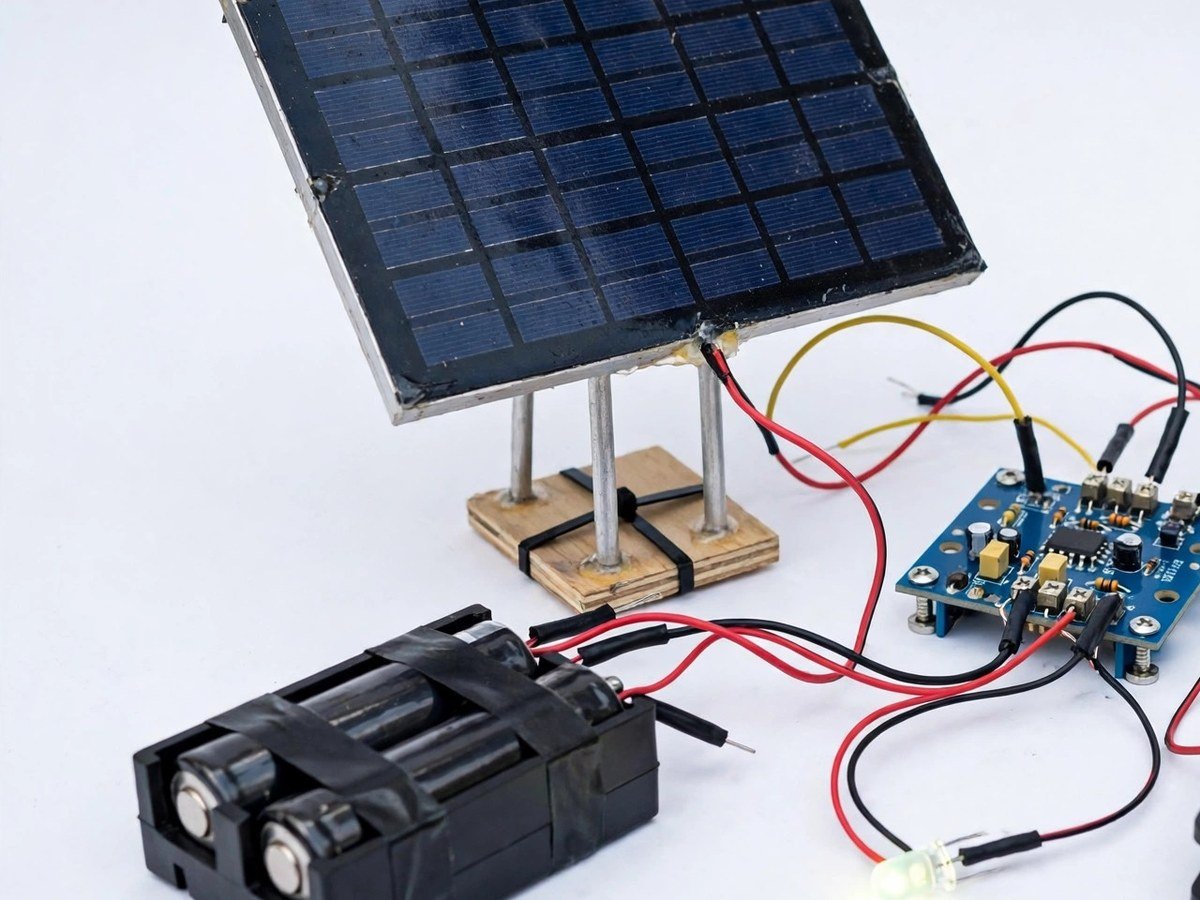
- Connect the small solar panel to the charge module and the rechargeable battery, following the wiring guide.
- Connect the LED and the small DC fan as the loads, and check the wiring before placing the panel in sun.
- Place the panel in direct sun and record the output, then move it into shade and record again.
- Tilt the panel at different angles to the sun and record which angle gives the strongest output.
- Charge the battery from the panel, then disconnect the panel and time how long the stored charge runs the fan.
- Compare the three results as a class: sun versus shade, best angle, and stored-run time.
- Discuss what the demo does not show: cloudy days, night-time use, and the size of panel a real home would need.
- Disconnect the battery and pack the panel face-up and protected, so it is not scratched in storage.
Features
- A small solar panel students can move, tilt, and shade, with visible results.
- A rechargeable battery and charge module, so energy storage can be tested, not just claimed.
- An LED and a small DC fan as loads, so output can be seen and timed.
- A no-code build, so schools with no computer lab can run it.
- Measurement leads, so the class records numbers instead of guessing.
What Is Included
- Small solar panel
- Rechargeable battery + holder
- Charge module
- LED + small DC fan as loads
- Multimeter leads for measurement
Every pack also includes: all parts tested before dispatch; step-by-step assembly guide in English and Marathi; ready code where code is needed; a teacher guide with 3 classroom activities, common mistakes, and answers; spare jumper wires and a spare sensor or LED where the part is fragile; and WhatsApp support for the teacher.
Demo video: no video link is shown on this page yet. A demo video link will be added here only when a real video for this kit exists.
Tech Stack
- Small solar panel (demo size)
- Rechargeable battery + holder
- Charge module
- LED + small DC fan (loads)
- Multimeter leads
Specifications
| Parameter | Value |
|---|---|
| Controller | None — no-code kit |
| Energy source | Small solar panel (demo size) |
| Storage | Rechargeable battery + charge module |
| Loads | LED + small DC fan |
| Power | Solar panel + rechargeable battery |
| Build time | 60 minutes |
| Soldering | No |
| Coding level | No code needed |
| Phone or computer needed | Neither — measurement only |
| Wi-Fi needed | No |
Limitations
- This is a small demo panel. It cannot power a classroom, a home, or a large appliance, and it must not be connected to household wiring.
- Output depends on sunlight. On a cloudy day, indoors, or in shade, the panel will produce little or nothing, which is itself a teaching result.
- The kit does not include a multimeter unless the school already has one; the leads in the box are for measurement with the school meter. Check this before ordering if the class has no meter.
- Batteries must be handled by the teacher. Do not short the battery terminals and do not leave the battery charging unattended.
Frequently Asked Questions
Do students need to know coding?
No. This is the no-code kit in the set. The work is measuring, tilting, and timing.
Does this kit need a computer lab?
No. No computer, phone, or code is needed at any stage.
Will it work on a cloudy day?
Poorly, and that is a useful result. The class can record the cloudy-day output and compare it with a sunny day.
Is soldering needed?
No.