More kit photos (2)
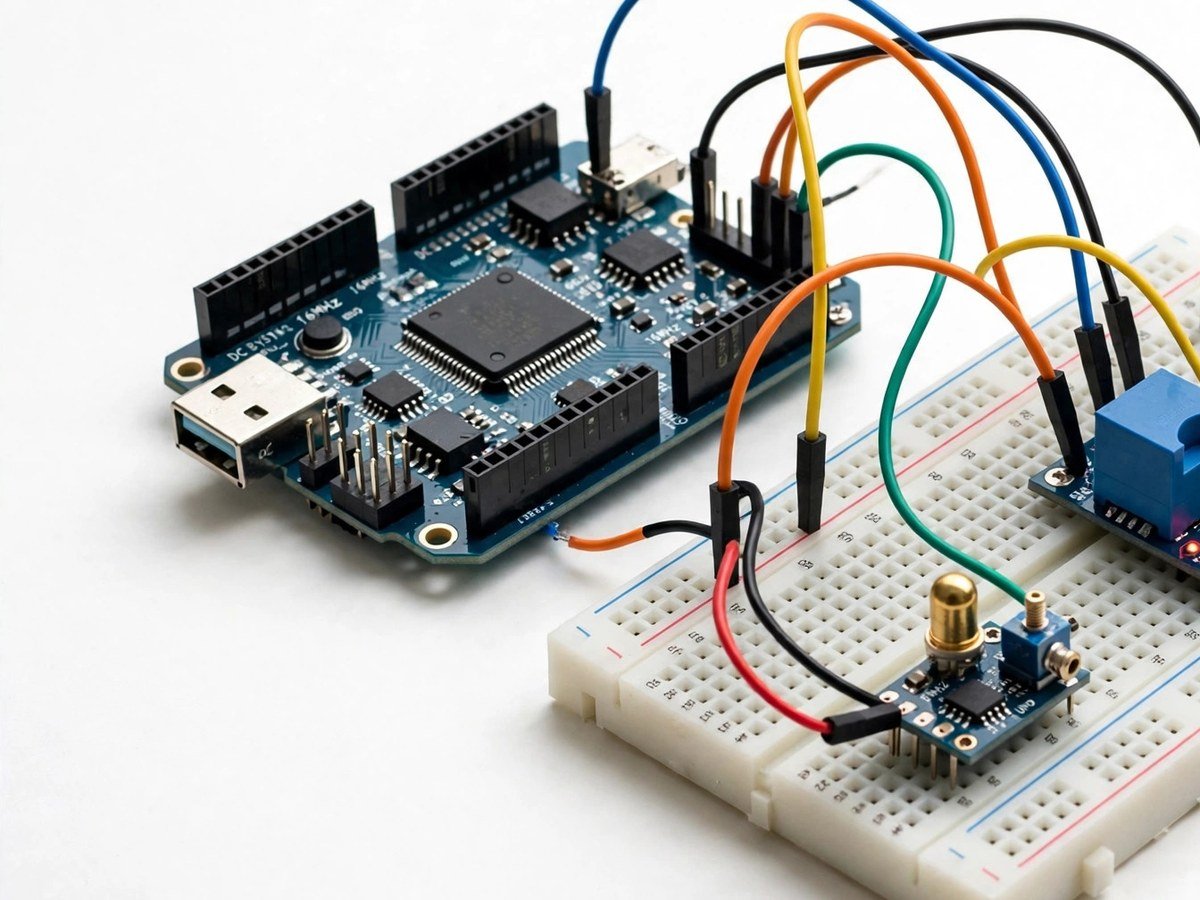
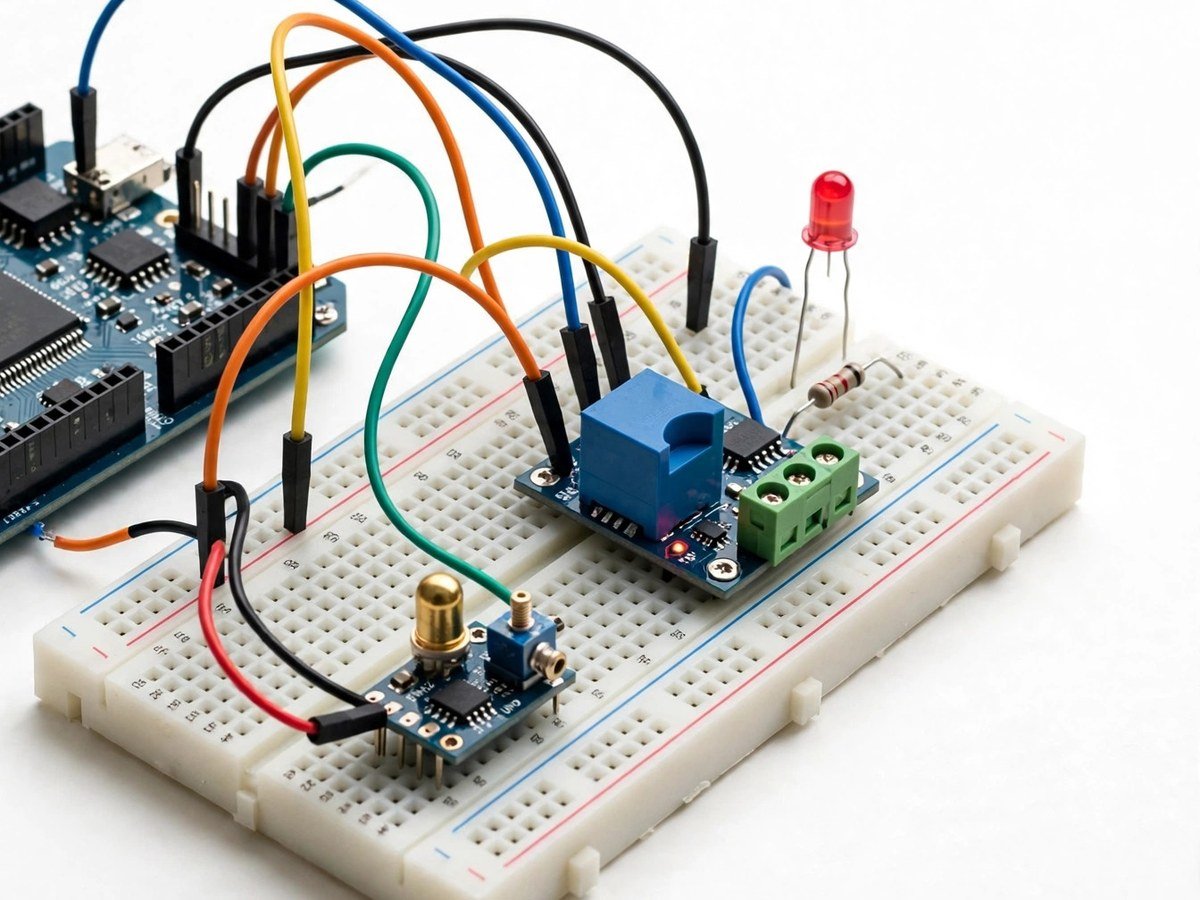
Build time: 45 minutes · Soldering: No
Safety note: the classroom version switches a low-voltage LED demo load only. No mains wiring by students.
The Problem
Sound control feels like magic to students: clap, and a light changes. The lesson hiding inside is less magical and more useful — a sensor does not hear a clap, it measures loudness, and any sound louder than the threshold counts. That is why a dropped book, a slammed door, or a loud laugh can switch the same light, and why a soft clap sometimes does nothing. This kit makes that visible in one period, with a single LED as the output and a threshold the class sets itself. Once students have watched false triggers happen, they understand something real about every voice and sound device they use: a threshold is a choice, and every choice trades missed claps against false ones.
How It Works
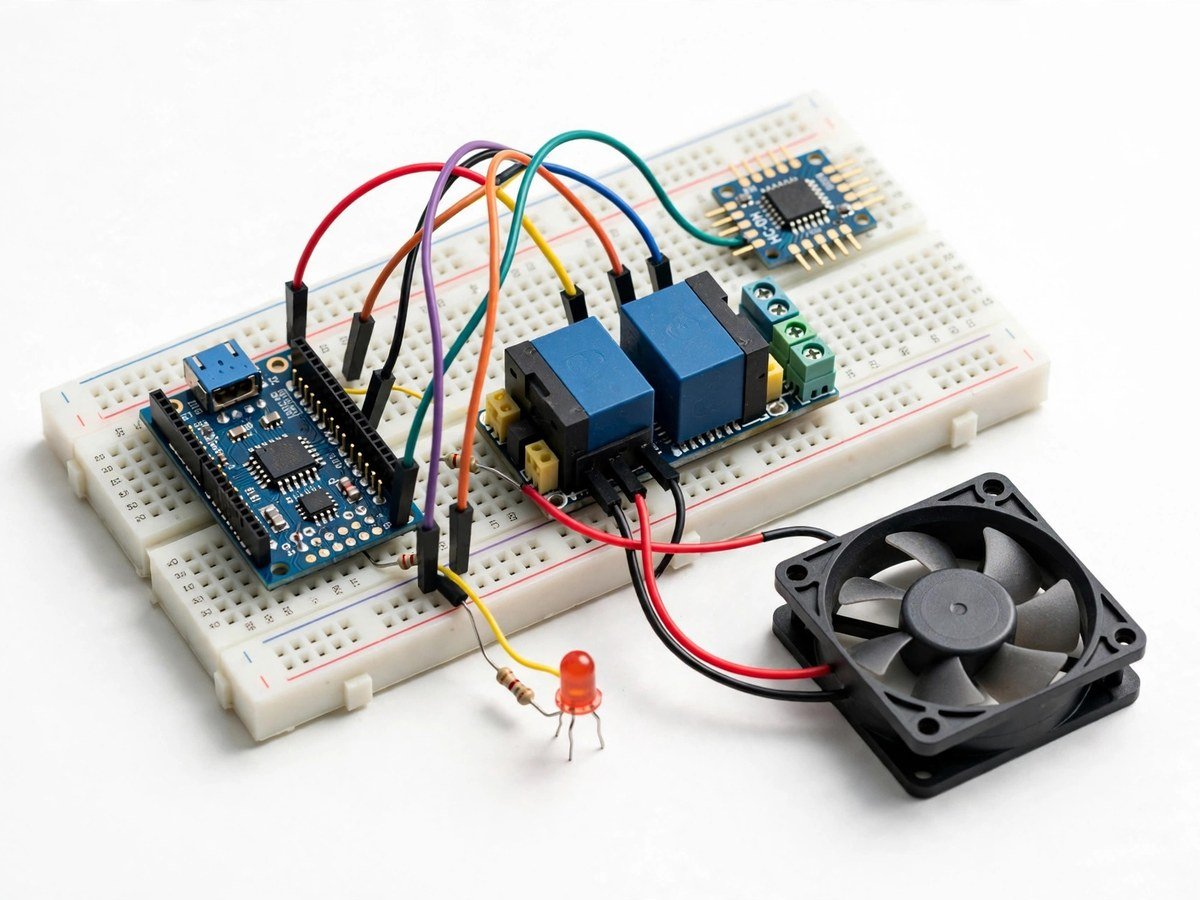
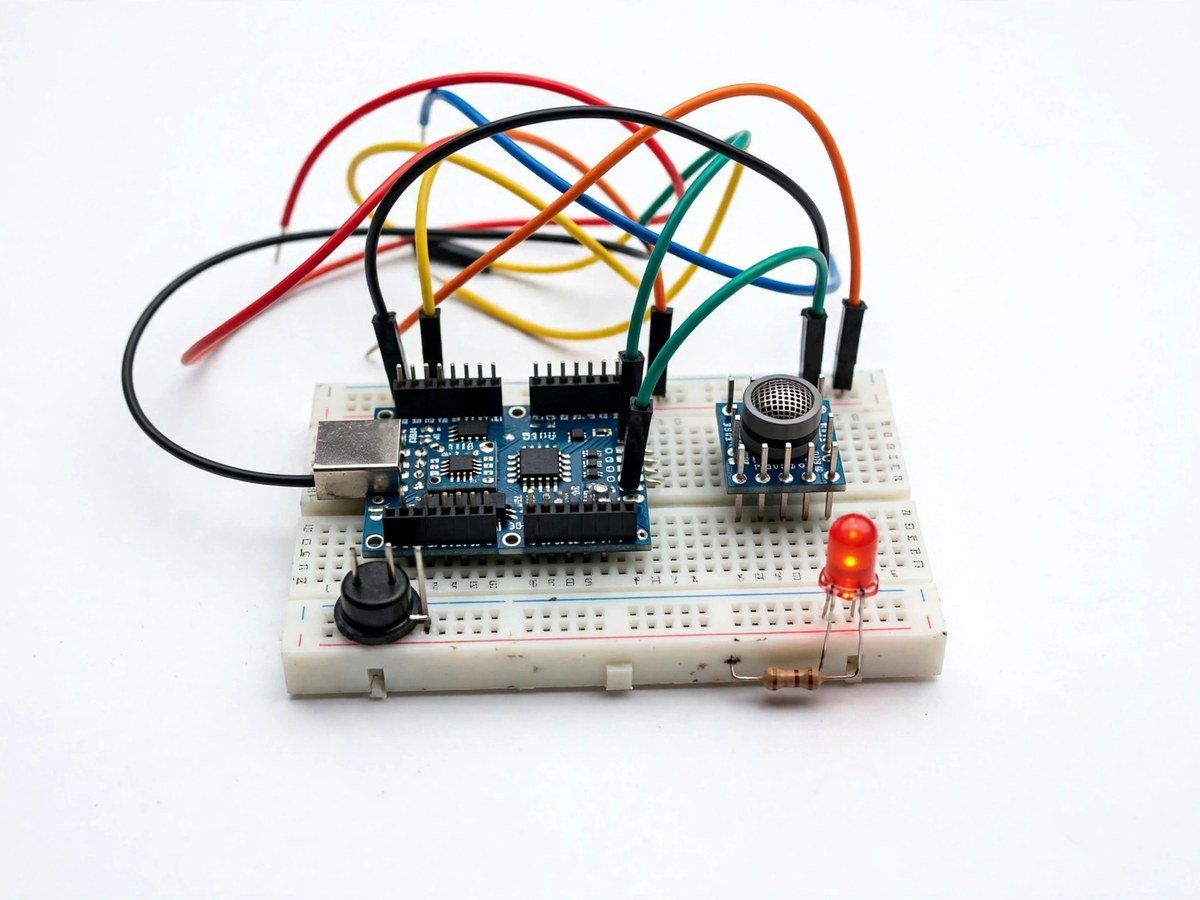
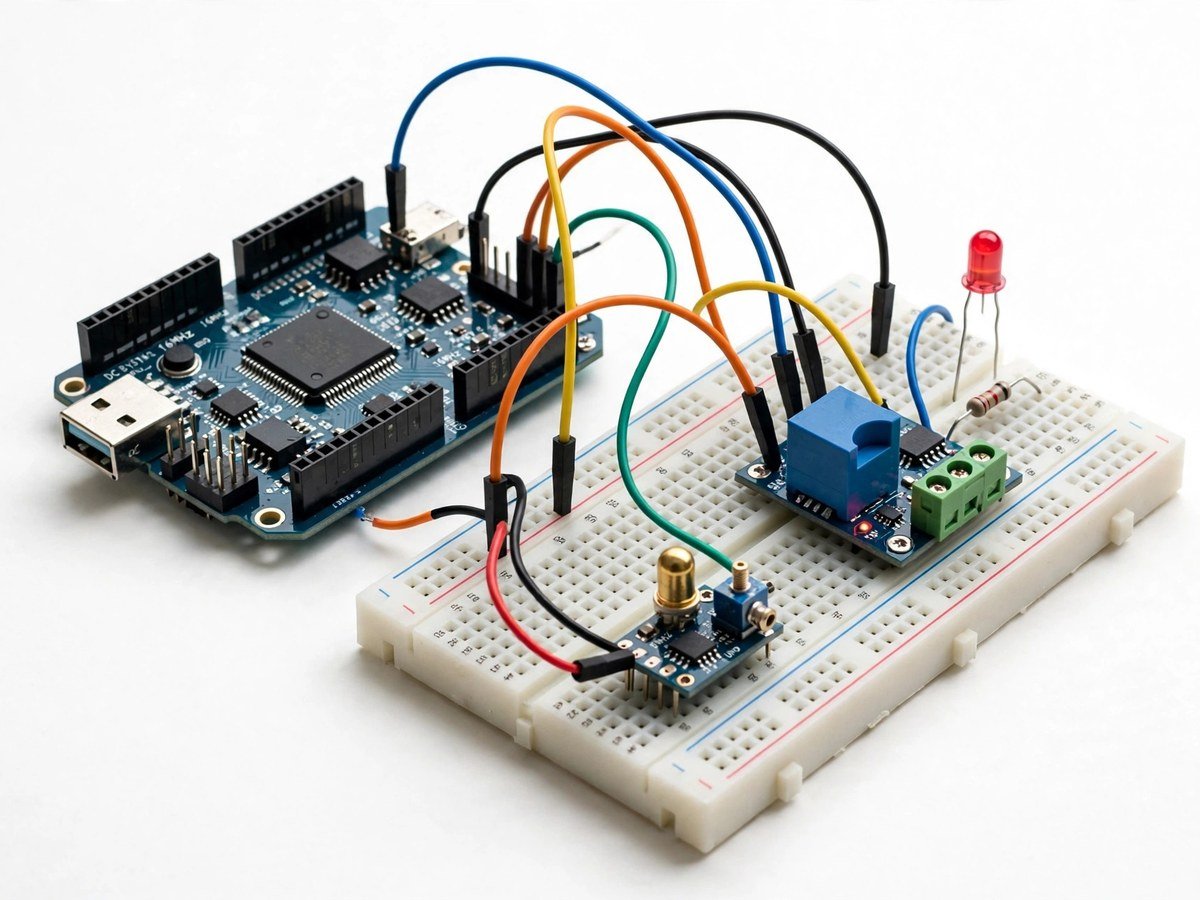
- Connect the sound sensor module, relay module, and LED to the board through the breadboard, following the wiring guide.
- Upload the ready code and check that the LED starts in the off state.
- Clap once, clearly, and check that the LED switches on. Clap again and check that it switches off.
- Set the sound threshold as a class decision: high enough to ignore background noise, low enough to catch a normal clap.
- Test the threshold with ordinary classroom sounds: a cough, a book closing, a door, a laugh.
- List which sounds triggered the LED by accident and discuss why each one crossed the threshold.
- Discuss the trade-off the class just made: a low threshold catches soft claps but also catches noise, and a high threshold ignores noise but misses soft claps.
- Switch the kit off and pack the sensor and relay back carefully before storage.
Features
- A sound sensor module, so the class works with real classroom noise, not a pretend input.
- A relay-switched LED, so the clap visibly changes an output.
- A class-set threshold, so students decide what counts as a clap.
- A false-trigger test, so the class discovers the limits of sound control for itself.
- Breadboard build only, so the classroom build needs no soldering.
What Is Included
- Arduino-compatible board
- Sound sensor module
- Relay module
- LED
- Breadboard
- Jumper wires
- Battery holder
Every pack also includes: all parts tested before dispatch; step-by-step assembly guide in English and Marathi; ready code where code is needed; a teacher guide with 3 classroom activities, common mistakes, and answers; spare jumper wires and a spare sensor or LED where the part is fragile; and WhatsApp support for the teacher.
Demo video: no video link is shown on this page yet. A demo video link will be added here only when a real video for this kit exists.
Tech Stack
- Arduino-compatible board
- Sound sensor module
- Relay module
- LED
- Breadboard
Specifications
| Parameter | Value |
|---|---|
| Controller | Arduino-compatible board |
| Main sensor | Sound sensor module |
| Switching | Relay module, LED demo load only |
| Output | LED |
| Power | Battery holder (batteries as supplied in the pack) |
| Build time | 45 minutes |
| Soldering | No |
| Coding level | Ready code; threshold is set as a class decision |
| Phone or computer needed | Computer only to upload the ready code once |
| Wi-Fi needed | No |
Limitations
- This is a classroom demonstration of sound switching. It is not a home automation system and must never be wired to household mains or fitted to a real room light by students.
- The sensor measures loudness, not claps. Any loud sound above the threshold — a door, a dropped book, a laugh — can switch the LED, and a soft clap below it will not.
- Background noise matters. In a noisy corridor or a loud classroom, the threshold must be set higher, and soft claps may then be missed.
- The relay in the classroom version switches the low-voltage LED demo load only. No mains wiring by students, ever.
Frequently Asked Questions
Do students need to know coding?
No. Ready code is included. The class decision is the threshold.
Why does the LED switch when nobody clapped?
Any sound above the threshold counts, including a door or a dropped book. That is a false trigger, and it is the main lesson of this kit.
Can this kit switch a real room light?
No, not in its classroom form. It switches a low-voltage LED demo load only, and it must never be wired to household mains by students.
Is soldering needed?
No. The classroom version uses a breadboard and pre-wired modules.