More kit photos (2)
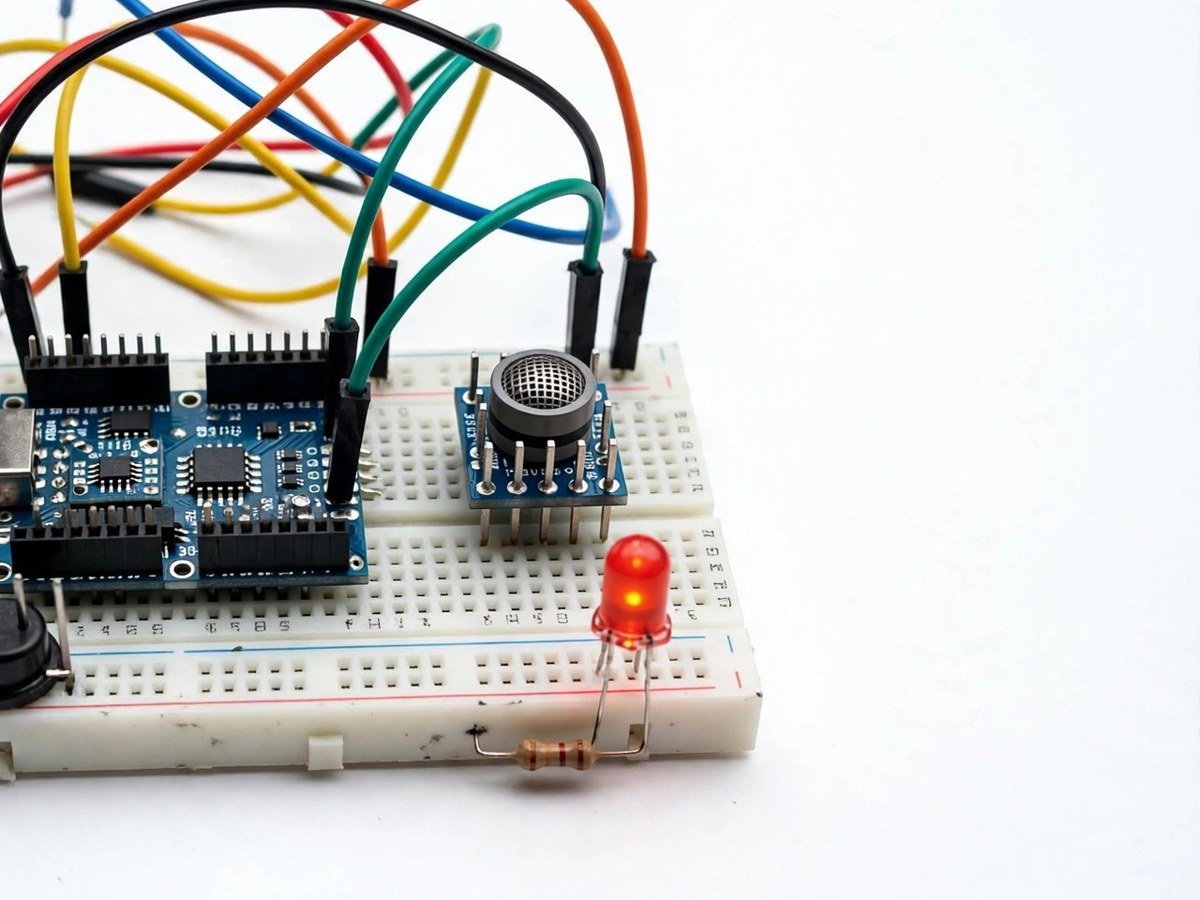
Build time: 45 minutes · Soldering: No
The Problem
Fire safety in schools is usually taught as a poster: do not panic, leave the building. Students can repeat the poster without ever seeing how an alarm decides to sound, which means they also cannot judge a false alarm, a dead sensor, or a threshold set so high that nothing ever triggers it. This kit shows the decision. A smoke sensor gives a reading, the class sets a threshold, and the buzzer and light fire only above that threshold. The third activity — writing the school response steps — is deliberate: a working alarm with no response plan is only half a safety system, and the class should leave the lesson knowing both halves.
How It Works
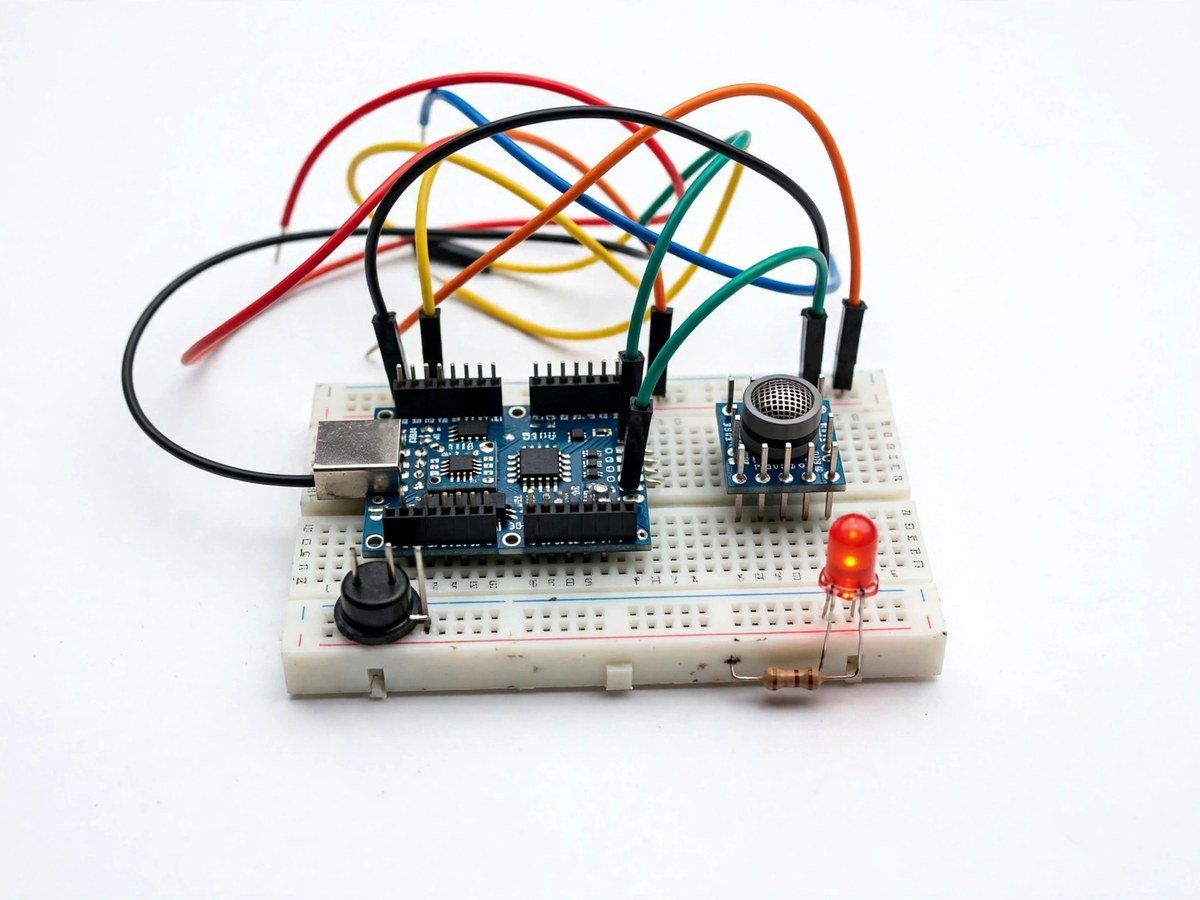
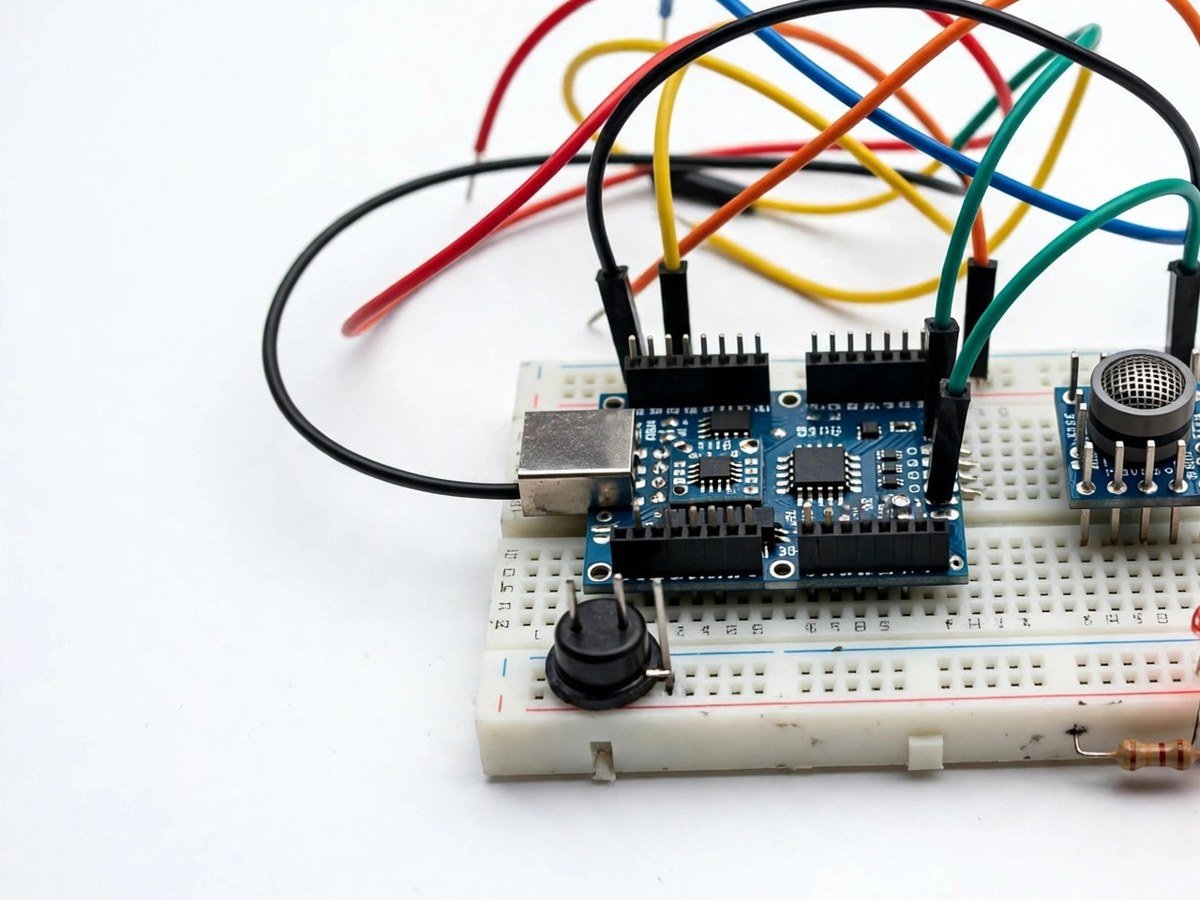
- Connect the MQ-series smoke/gas sensor, buzzer, and red LED to the board, following the wiring guide.
- Upload the ready code and record the clean-air reading first, with no smoke source nearby.
- Under teacher supervision only, bring a small smoke source near the sensor and record how the reading rises.
- Set the alarm threshold between the clean-air reading and the smoke reading, as a class decision.
- Test the threshold: below it, no alarm; above it, buzzer and LED together.
- Discuss false alarms: a threshold set too low will sound for cooking smoke or dust, and a threshold set too high will miss a real fire.
- Write the school response steps as a class: who raises the alarm, which exit, where the class assembles.
- Air the room, switch the kit off, and pack the sensor back carefully.
Features
- MQ-series smoke/gas sensing, so the class works with a real rising reading, not a pretend alarm.
- A buzzer and red LED that fire together above the threshold.
- A class-set threshold, so students decide what counts as an alarm.
- A response-plan activity, so the lesson ends with what to do, not just how the sensor works.
- Breadboard build only, so the classroom build needs no soldering.
What Is Included
- Arduino-compatible board
- MQ-series smoke/gas sensor
- Buzzer
- Red LED
- Breadboard
- Wires
Every pack also includes: all parts tested before dispatch; step-by-step assembly guide in English and Marathi; ready code where code is needed; a teacher guide with 3 classroom activities, common mistakes, and answers; spare jumper wires and a spare sensor or LED where the part is fragile; and WhatsApp support for the teacher.
Demo video: no video link is shown on this page yet. A demo video link will be added here only when a real video for this kit exists.
Tech Stack
- Arduino-compatible board
- MQ-series smoke/gas sensor
- Buzzer
- Red LED
- Breadboard
Specifications
| Parameter | Value |
|---|---|
| Controller | Arduino-compatible board |
| Main sensor | MQ-series smoke/gas sensor |
| Alarm outputs | Buzzer + red LED |
| Power | Board power as supplied in the pack |
| Build time | 45 minutes |
| Soldering | No |
| Coding level | Ready code; threshold is set as a class decision |
| Phone or computer needed | Computer only to upload the ready code once |
| Wi-Fi needed | No |
Limitations
- This is a classroom demonstration. It is not a certified fire alarm and must never replace a school fire alarm system, a fire drill, or the school evacuation plan.
- Any smoke source in class must be teacher-supervised only, small, and used in a ventilated room. Students must not bring their own smoke sources.
- The sensor reacts to several gases and to smoke, not to fire itself. Cooking smoke, dust, and strong fumes can also raise the reading, which is why the threshold discussion matters.
- Sensor readings drift with age and environment. The clean-air reading must be recorded fresh at the start of each lesson.
Frequently Asked Questions
Do students need to know coding?
No. Ready code is included. The class decision is the threshold.
Is this kit a real fire alarm for the school?
No. It is a classroom demonstration only. It must never replace the school fire alarm system or evacuation plan.
Can students test it with smoke themselves?
No. Any smoke source in class is teacher-supervised only, small, and in a ventilated room.
Is soldering needed?
No. The classroom version uses a breadboard.