More kit photos (2)
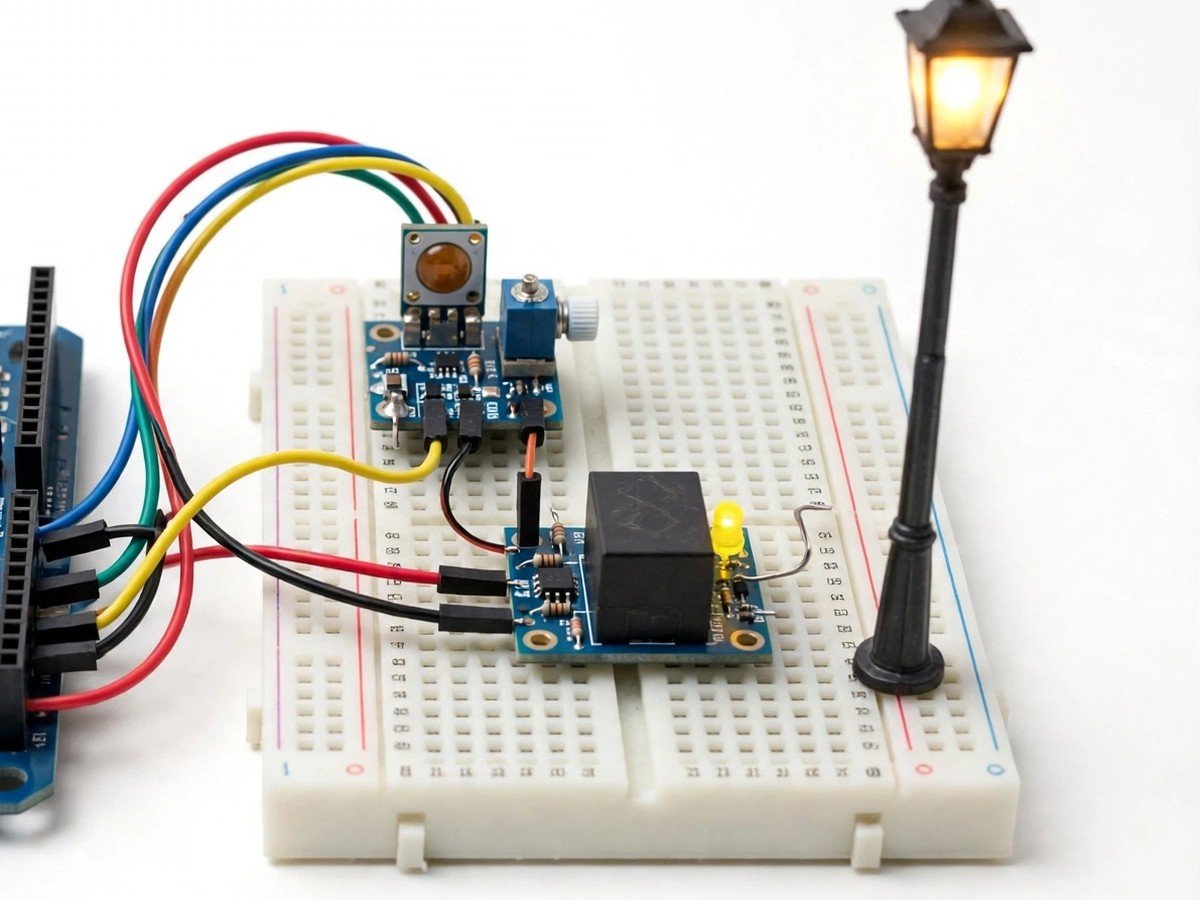
Build time: 45 minutes · Soldering: No
Safety note: the classroom version switches a low-voltage LED model light only. No mains wiring by students.
The Problem
Street lights switching on at dusk look automatic, but somebody, or something, has to decide when dusk is. That decision is a threshold on a light reading, and this kit lets a class make it for themselves. A light sensor watches the room, and when the reading falls below the level the class chose, a model street light switches on. Cover the sensor with a hand and the lamp lights in the middle of the day. Shine a torch on it at dusk and it stays off. Both are correct behaviour for the rule the class wrote, and both teach the same point: an automatic light does not know it is night, it only knows a number crossed a line. Testing that rule in dim corners, under a desk lamp, and in bright sunlight shows students where automatic switching helps and where it flickers.
How It Works
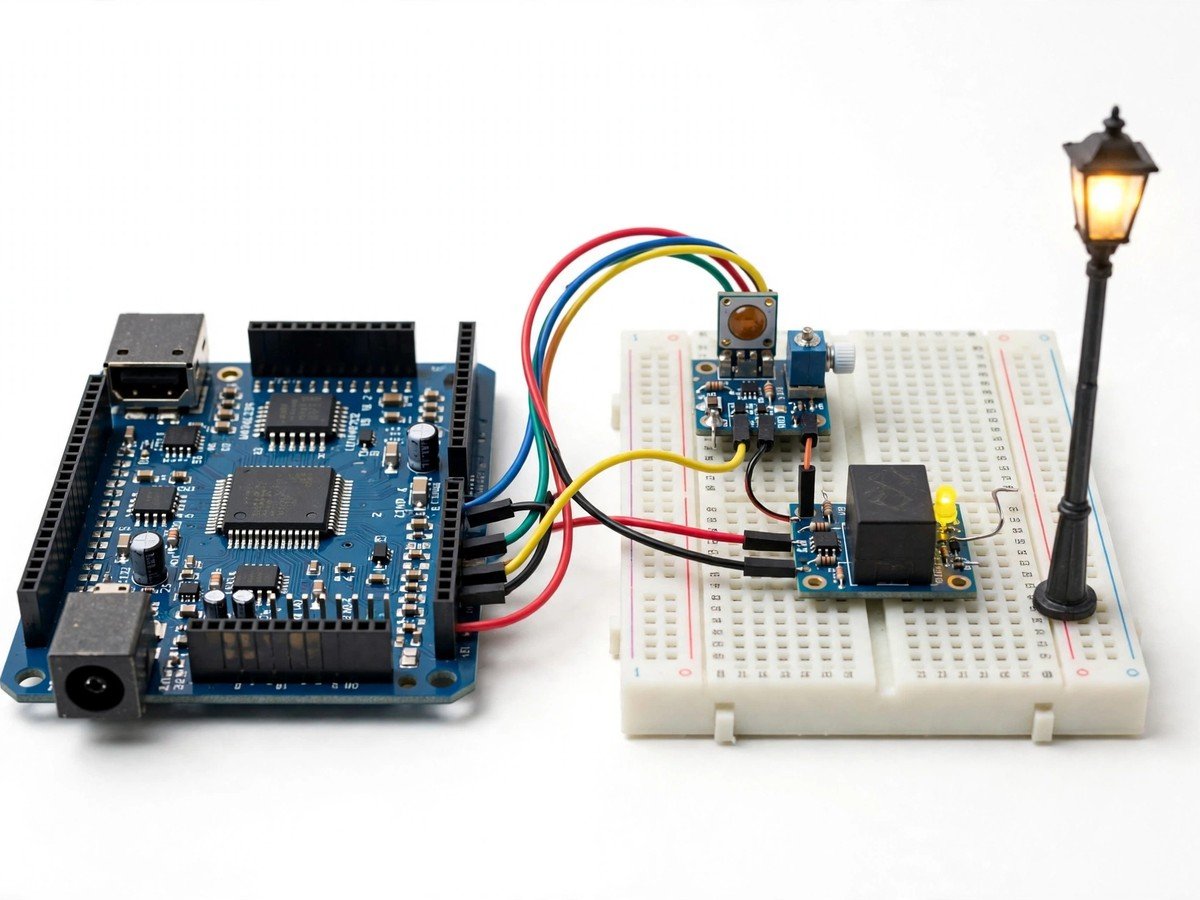
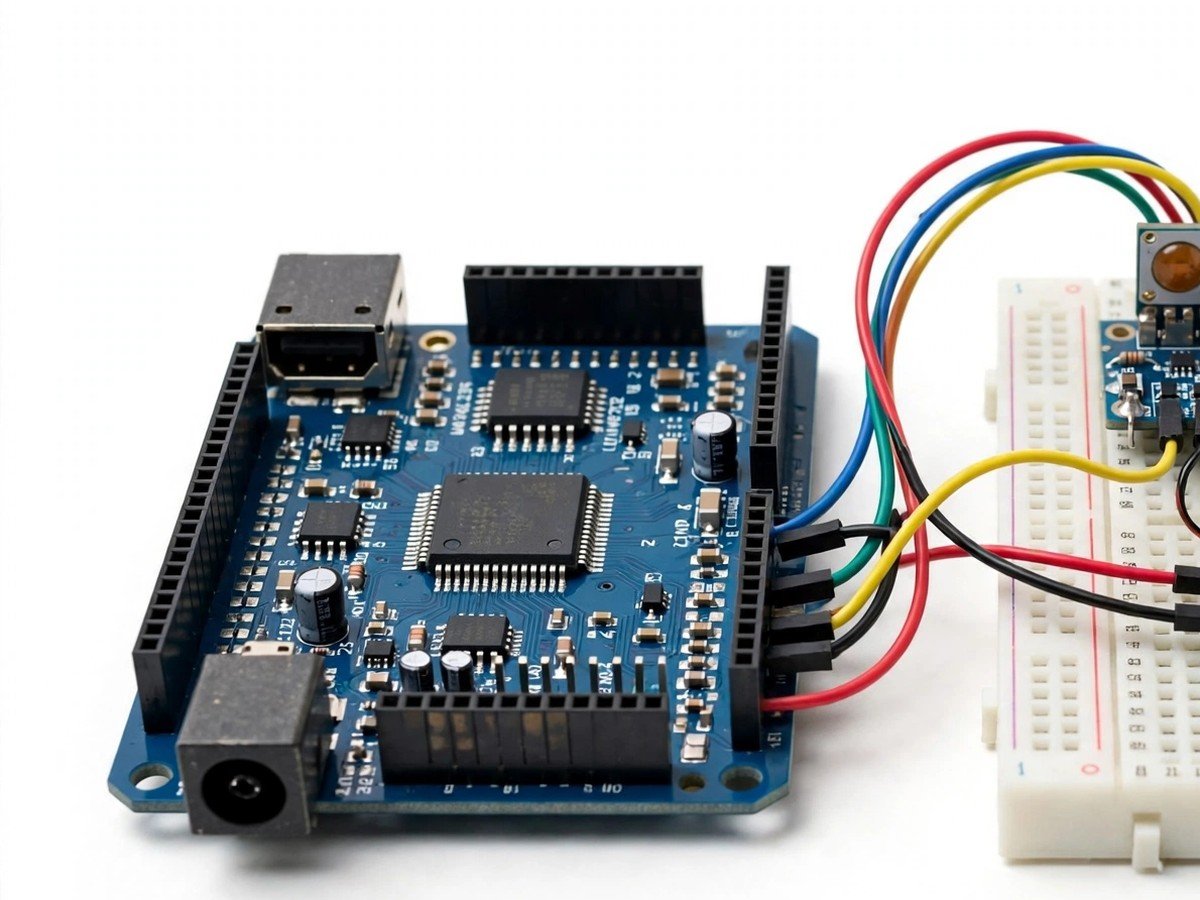
- Connect the LDR module, relay module, and LED street-light model to the board through the breadboard, following the wiring guide.
- Upload the ready code and check that the model light starts off in a bright room.
- Cover the light sensor with a hand and check that the model light switches on.
- Uncover the sensor and check that the model light switches off again.
- Set the dusk threshold as a class decision: low enough to stay off in a bright room, high enough to switch on in dim light.
- Test the threshold in different light: a dim corner, under a desk lamp, and near a window.
- Discuss the trade-off: a high threshold switches the light on early and wastes energy, while a low threshold waits until it is properly dark.
- Switch the kit off and pack the street-light model back carefully, as it is the most fragile part of this kit.
Features
- An LDR light sensor, so the class works with real room light, not a pretend input.
- A model street light that switches on and off by itself, so the automatic behaviour is visible across the room.
- A class-set dusk threshold, so students decide what counts as dark.
- A relay-switched LED model, so the switching step is visible and safe to discuss.
- Breadboard build only, so the classroom build needs no soldering.
What Is Included
- Arduino-compatible board
- LDR module
- LED street-light model
- Relay module
- Breadboard
- Jumper wires
Every pack also includes: all parts tested before dispatch; step-by-step assembly guide in English and Marathi; ready code where code is needed; a teacher guide with 3 classroom activities, common mistakes, and answers; spare jumper wires and a spare sensor or LED where the part is fragile; and WhatsApp support for the teacher.
Demo video: no video link is shown on this page yet. A demo video link will be added here only when a real video for this kit exists.
Tech Stack
- Arduino-compatible board
- LDR module
- LED street-light model
- Relay module
- Breadboard
Specifications
| Parameter | Value |
|---|---|
| Controller | Arduino-compatible board |
| Main sensor | LDR module |
| Switching | Relay module, LED model load only |
| Output | LED street-light model |
| Power | Board power as supplied in the pack |
| Build time | 45 minutes |
| Soldering | No |
| Coding level | Ready code; dusk threshold is set as a class decision |
| Phone or computer needed | Computer only to upload the ready code once |
| Wi-Fi needed | No |
Limitations
- This is a classroom demonstration of automatic switching. It is not a street lighting system and must never be wired to household mains or fitted to a real street light by students.
- The relay in the classroom version switches the low-voltage LED model only. No mains wiring by students, ever.
- The sensor measures light at one spot. A shadow from a hand, a bag, or a curtain can switch the model light on in the middle of the day, which is correct for the rule but wrong for the street.
- In flickering light near the threshold, the model light may switch on and off repeatedly. That flicker is a real behaviour of threshold switching, and a good classroom discussion.
Frequently Asked Questions
Do students need to know coding?
No. Ready code is included. The class decision is the dusk threshold.
Why did the light switch on when a student covered the sensor?
Covering the sensor drops the light reading below the threshold, which is exactly the condition the rule switches on for.
Can this kit control a real street light?
No, not in its classroom form. It switches a low-voltage LED model only, and it must never be wired to household mains by students.
Is soldering needed?
No. The classroom version uses a breadboard and pre-wired modules.