
More project photos (3)
The problem
Traditional electricity meters provide limited visibility into real-time energy consumption patterns. Users often cannot identify which appliances contribute to higher electricity usage or detect unusual consumption until receiving the electricity bill.
This project provides an IoT-based approach for monitoring electrical parameters continuously. By collecting consumption data and presenting it through a dashboard, users can analyse usage patterns, estimate costs, and receive alerts when consumption exceeds defined limits.
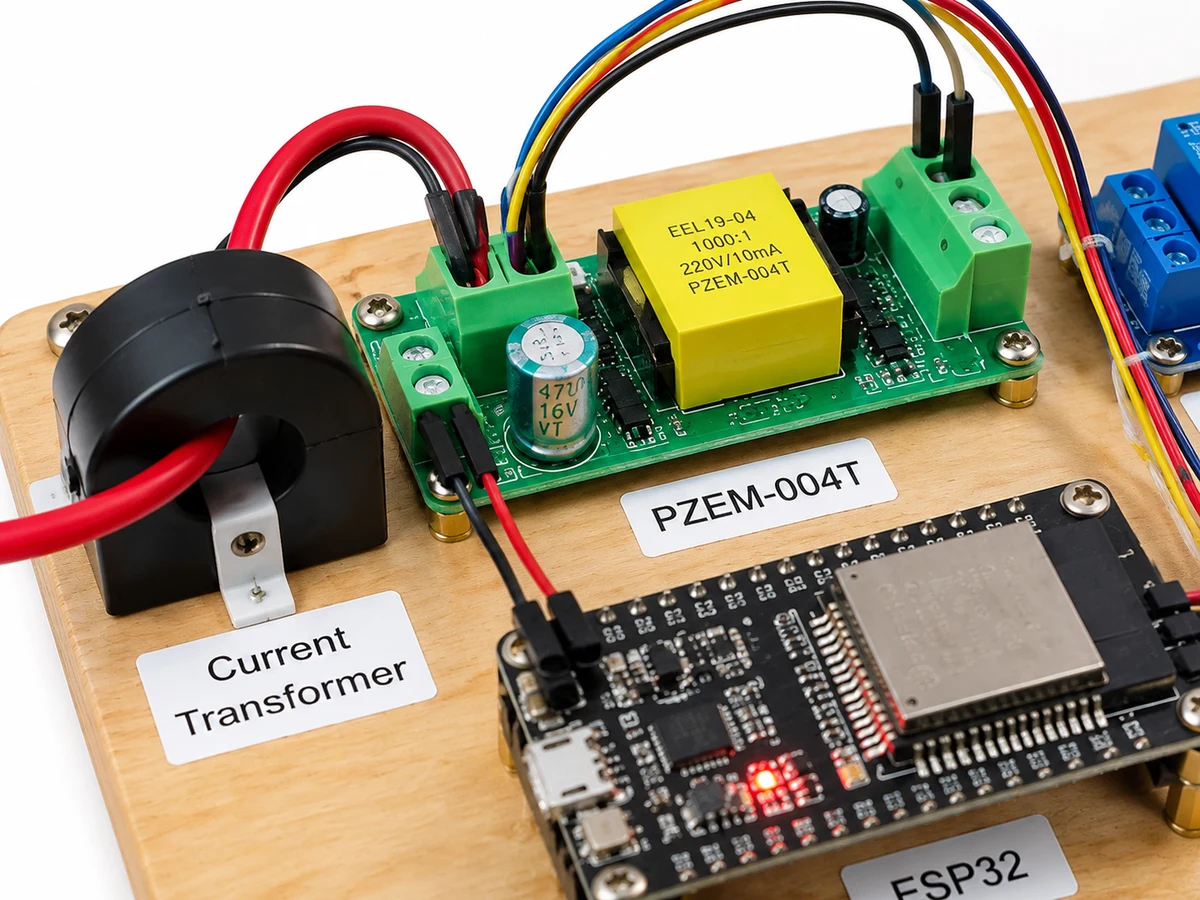
Energy monitoring module that measures voltage and current from the connected load.
Follow the working sequence
How it works
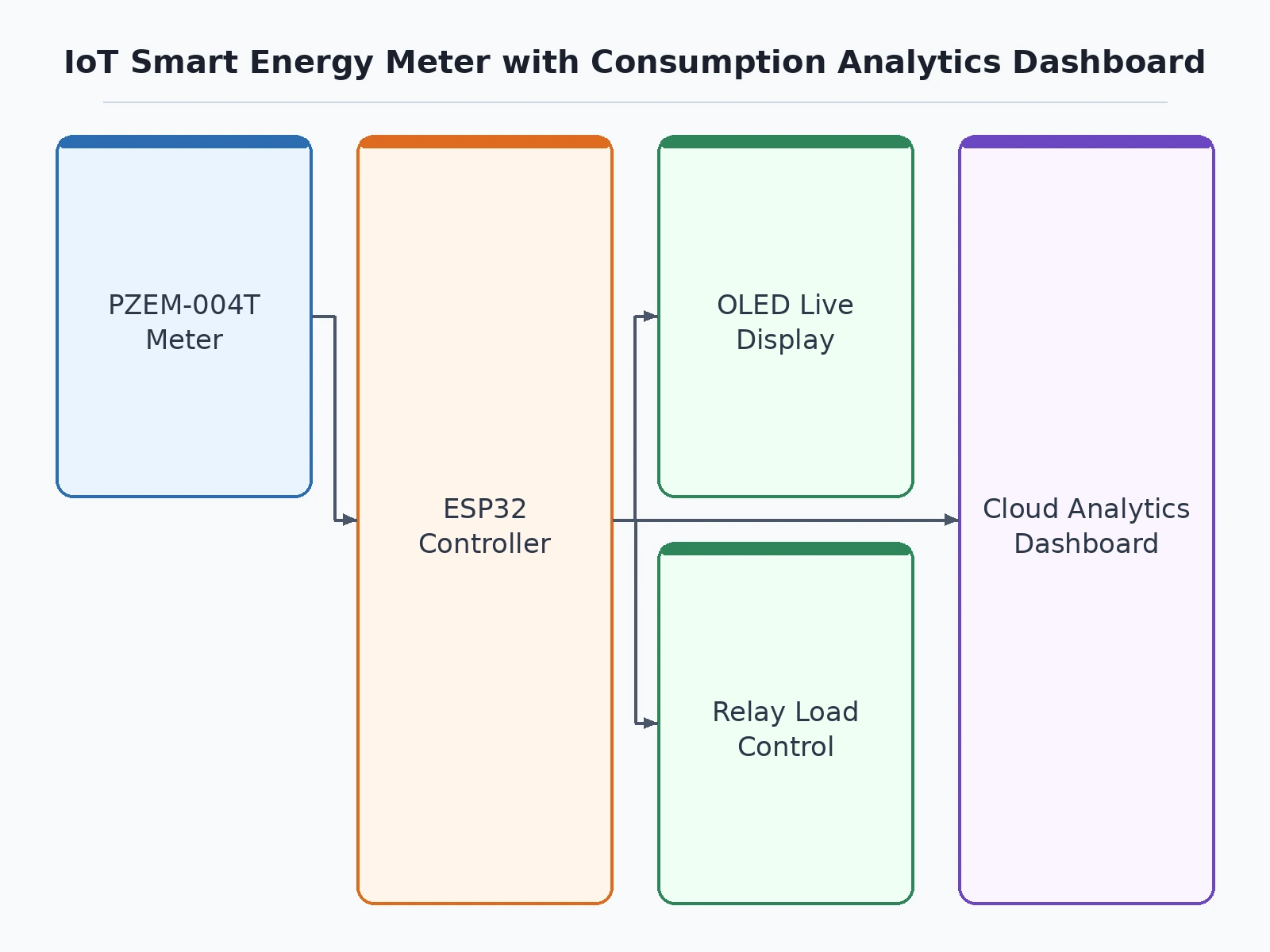
- The PZEM-004T energy monitoring module measures electrical parameters from the connected load using voltage and current sensing.
- The ESP32 collects measurement data from the energy metering module.
- The processed readings are displayed locally on the OLED screen.
- ESP32 sends energy data to the connected cloud platform through Wi-Fi communication.
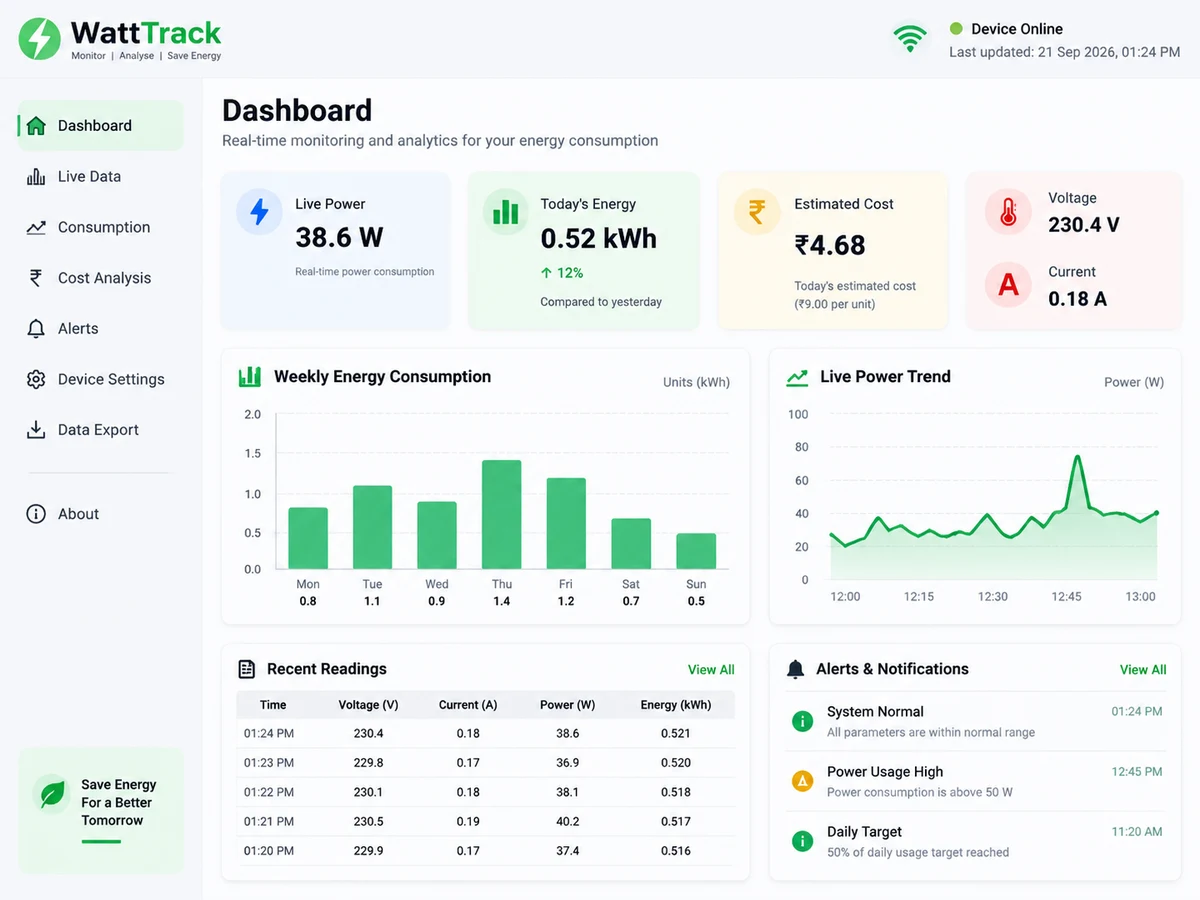
- The dashboard stores and visualises energy consumption data using graphs and analytics.
- The system calculates approximate electricity cost based on recorded energy units.
- Alerts are generated when consumption crosses configured usage limits.
- The relay module can demonstrate automatic load switching based on system conditions.
Project features
Real-time measurement of voltage, current, power, and energy consumption.
Live electrical parameter display through an onboard OLED screen.
IoT-based dashboard for monitoring energy usage remotely.
Consumption analytics with graphical power and energy usage trends.
Estimated electricity cost calculation based on energy consumption data.
Overuse monitoring with configurable energy consumption alerts.
Relay-based load control demonstration for connected electrical devices.
ESP32-based wireless data transmission for cloud connectivity.
What is included
Working IoT smart energy meter prototype.
ESP32-based embedded monitoring system.
PZEM-004T energy measurement module integration.
OLED display interface for local readings.
Relay module with demo load control setup.
Cloud dashboard for consumption monitoring and analytics.
Source code and basic system documentation.
Project explanation support for demonstration and viva preparation.
Advantages
- Real-time measurement of voltage, current, power, and energy consumption in a single unit.
- Live readings on the onboard OLED display plus remote monitoring through a cloud-based analytics dashboard with consumption trend graphs.
- Estimated electricity cost calculation derived from measured energy data.
- Configurable overuse alerts when energy consumption crosses set limits.
- Relay-based load-control demonstration for connected electrical devices, with ESP32 wireless data transmission to the cloud.
Disadvantages
- Measurement accuracy depends on the quality and calibration of the energy-measurement module; an academic prototype, not certified for commercial billing.
- Cloud monitoring needs stable internet connectivity, and dashboard behaviour depends on the selected cloud-platform configuration.
- High-voltage electrical connections require proper safety precautions.
- Industrial-scale deployment would need additional protection circuitry.
Limitations & prerequisites
Prerequisites:
- Basic understanding of IoT systems and embedded electronics.
- Knowledge of ESP32 programming and sensor interfacing.
- Basic understanding of electrical measurement concepts.
- Computer system for firmware uploading and dashboard configuration.
- Wi-Fi connectivity for cloud-based monitoring.
Limitations:
- Accuracy depends on the quality and calibration of the energy measurement module.
- Designed as an academic prototype and not certified for commercial electricity billing.
- Cloud monitoring requires stable internet connectivity.
- Dashboard functionality depends on the selected cloud platform configuration.
- High-voltage electrical connections require proper safety precautions.
- Needs additional protection circuitry for industrial-scale deployment.
Components & software requirements
- ESP32 Development Board
- PZEM-004T Energy Metering Module with Current Transformer
- OLED Display Module
- Relay Module
- Demo Bulb Load
- Cloud Dashboard Platform
- Embedded Firmware (ESP32)
- Data Visualisation Interface
Delivery information
Estimated delivery time: Needs confirmation based on hardware availability, dashboard requirements, and customisation level.
Customisation options
- Custom dashboard design.
- Additional appliance monitoring channels.
- Mobile application integration.
- Different display modules.
- Automated appliance scheduling.
- Additional sensors for advanced energy analysis.
Download free synopsis (PDF)
Enter your name and WhatsApp number — the synopsis PDF downloads immediately. We may send occasional project updates on WhatsApp; no spam.
Single-Phase Network Energy Consumption Monitoring System, Springer LNNS