
More project photos (2)
The problem
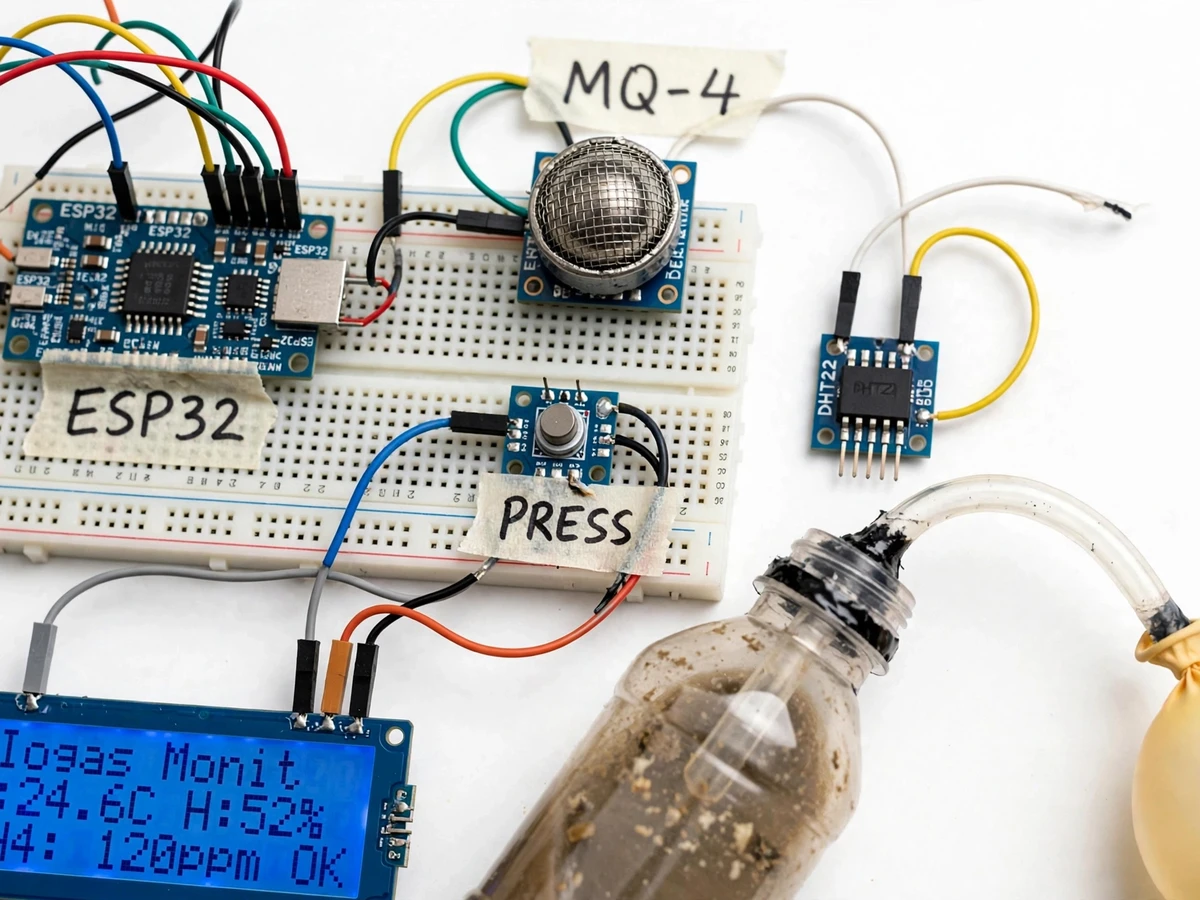
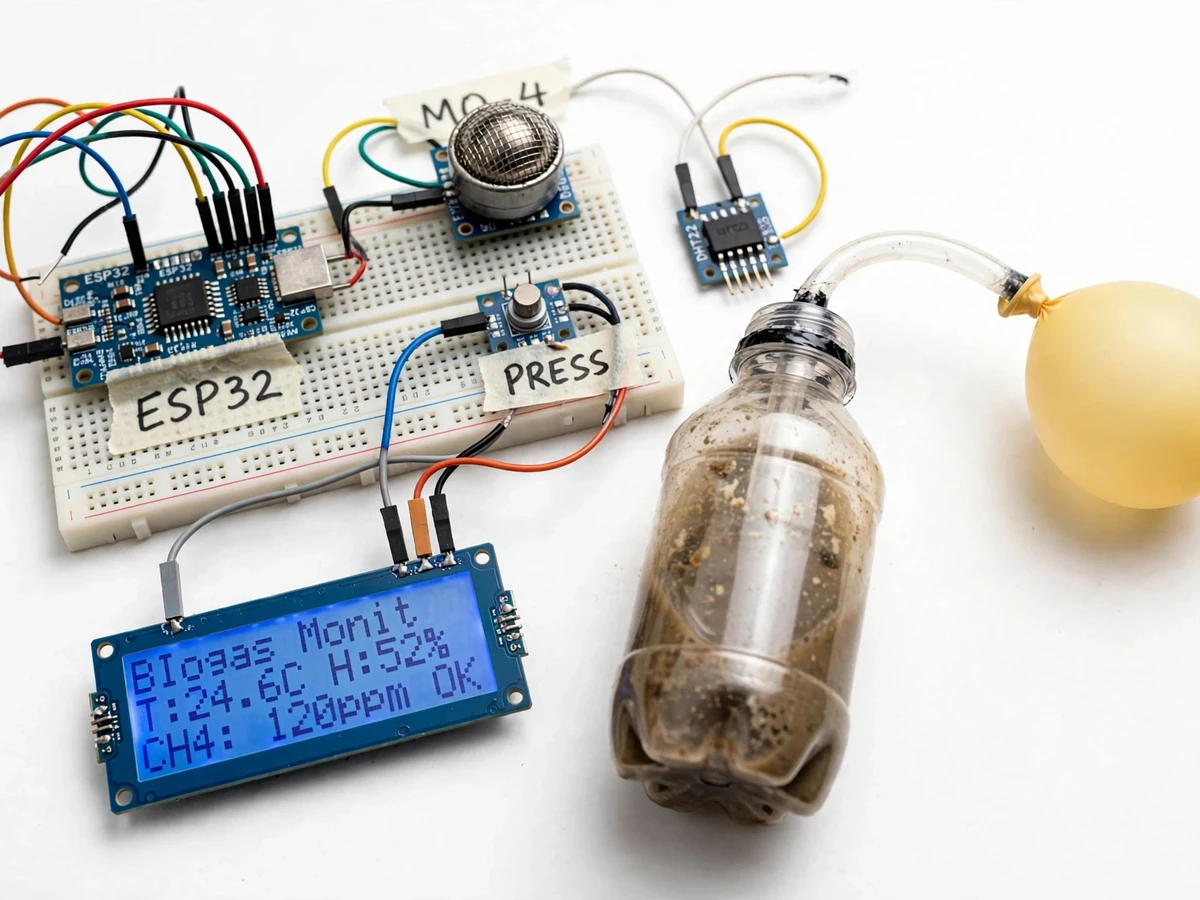
Small biogas digesters are usually built and then ignored: a bottle of slurry with a tube, producing gas nobody measures. Without instruments the student cannot tell whether the digester is healthy, stalled, or leaking — methane is odourless and invisible, pressure build-up is hidden, and temperature swings silently kill the methanogens. This project instruments a bottle-scale digester with an ESP32: an MQ-4 sensor watches methane concentration, a pressure sensor tracks gas build-up in the headspace, and a DHT22 reports digester temperature, with all three shown live on a 20x4 LCD alongside a status line. A balloon on the gas outlet makes production visible and gives the pressure reading something tangible to correlate with. The build is honest about its limits — the MQ-4 gives indicative readings that need calibration, and this is a teaching demo, not a certified gas-safety instrument.
How it works
- The bottle digester is charged with slurry and sealed; the gas outlet feeds a collection balloon.
- The MQ-4 methane sensor, pressure sensor and DHT22 report to the ESP32 on a timed sampling cycle.
- Firmware compares each reading against configured bands and sets the LCD status line (e.g. OK vs check-digester).
- The LCD refreshes each cycle with temperature, humidity, methane indication and pressure trend.
- The student logs readings against balloon inflation over days, building the production curve for the report.
- All thresholds are documented firmware constants, retunable for the student's feedstock.
Tech stack:
- ESP32 DevKit (Arduino/C++ firmware)
- MQ-4 methane gas sensor
- Pressure sensor module
- DHT22 temperature/humidity sensor
- 20x4 character LCD
- Bottle digester + balloon gas collector
| Parameter | Value |
|---|---|
| Controller | ESP32 DevKit (design) |
| Methane sensing | MQ-4 semiconductor sensor, indicative readings (design) |
| Pressure sensing | Headspace pressure module (design) |
| Temperature sensing | DHT22, ±0.5 °C typical (datasheet) |
| Display | 20x4 character LCD (design) |
| Digester | Bottle-scale demo reactor with balloon collector (design) |
| Supply | 5 V DC regulated (expected) |
Project features
- [Methane sensing] An MQ-4 sensor monitors methane concentration near the digester headspace, with the reading shown live on the LCD.
- [Gas pressure tracking] A pressure sensor follows headspace pressure as gas accumulates, correlated with the visible inflation of the collection balloon.
- [Digester temperature monitoring] A DHT22 tracks the slurry temperature that the methanogens depend on.
- [Live LCD status] A 20x4 LCD shows temperature, humidity, methane reading and a plain-language status line.
- [Visible gas collection] The demo digester uses a bottle reactor with a balloon collector, so gas production is observable and measurable.
- [Leak-awareness design] The methane channel exists to make invisible gas visible in the demo; the report teaches the limits of semiconductor gas sensing honestly.
- [Viva-ready documentation] Report, PPT and Q&A cover anaerobic digestion basics, sensor interfacing and calibration limits.
What is included
- Working monitor prototype (ESP32, MQ-4, pressure sensor, DHT22, 20x4 LCD)
- Bottle-scale demo digester rig with balloon gas collector
- Arduino firmware with bands and status logic
- Wiring diagram and connection list
- Digester charging and logging procedure
- Project report PDF, PPT presentation and viva Q&A document
Limitations & prerequisites
- The MQ-4 is a semiconductor sensor: its readings are indicative and drift with humidity, temperature and age — calibration against a known reference is required for anything beyond trend observation, and the report states this.
- This is a teaching demo at bottle scale, NOT a certified gas-safety instrument; it must never be relied on for leak protection in a real installation.
- Methane is flammable: the demo uses tiny quantities, no ignition sources are permitted near the rig, and the safety procedure in the report is mandatory reading.
- Digester output depends on feedstock, temperature and time — gas production figures are the student's own logged observations, never pre-claimed.
- The pressure sensor measures headspace pressure qualitatively for the demo; it is not a calibrated industrial gauge.
Frequently Asked Questions
How accurate is the methane reading?
The MQ-4 gives an indicative trend rather than a lab number: semiconductor sensors respond to methane but also drift with humidity, temperature and age. The report teaches this honestly and shows how to calibrate against a known reference for comparative work.
Is it safe to build a biogas digester for a college project?
At bottle scale with the documented safety procedure — tiny gas quantities, no ignition sources near the rig, ventilated workspace — yes, and the build ships with that procedure as mandatory reading. It is a teaching demo, not a gas appliance.
What does the balloon do?
It collects the produced gas visibly, so the student can correlate the pressure-sensor trend with actual inflation and even estimate daily production by balloon volume — a simple, honest measurement for the report.
How long before the digester produces gas?
Typically days to a couple of weeks depending on feedstock and temperature, which is exactly why the monitor exists: the student watches the startup curve instead of guessing. The report documents the expected timeline qualitatively.
Can the sensor detect a leak?
It can show elevated methane near the rig in the demo, which is a useful teaching observation — but the report is explicit that this build must never be used as leak protection for a real installation.
Is this project suitable for a final-year project?
Yes — for Electronics, Electrical and IoT & Embedded programs. It combines gas, pressure and temperature sensing with a real biochemical process and unusually honest instrumentation limits to discuss in the viva. Suitable for B.E./B.Tech final-year projects in Electronics, Electrical and IoT & Embedded.
Components & software requirements
- ESP32 DevKit (Arduino/C++ firmware)
- MQ-4 methane gas sensor
- Pressure sensor module
- DHT22 temperature/humidity sensor
- 20x4 character LCD
- Bottle digester + balloon gas collector
Delivery information
Built-to-order project. Delivery timeline is shared after order confirmation based on current queue.
Support terms
Complete documentation, setup guide, and viva preparation included. Support for setup and explanation provided.