
More project photos (2)
The problem
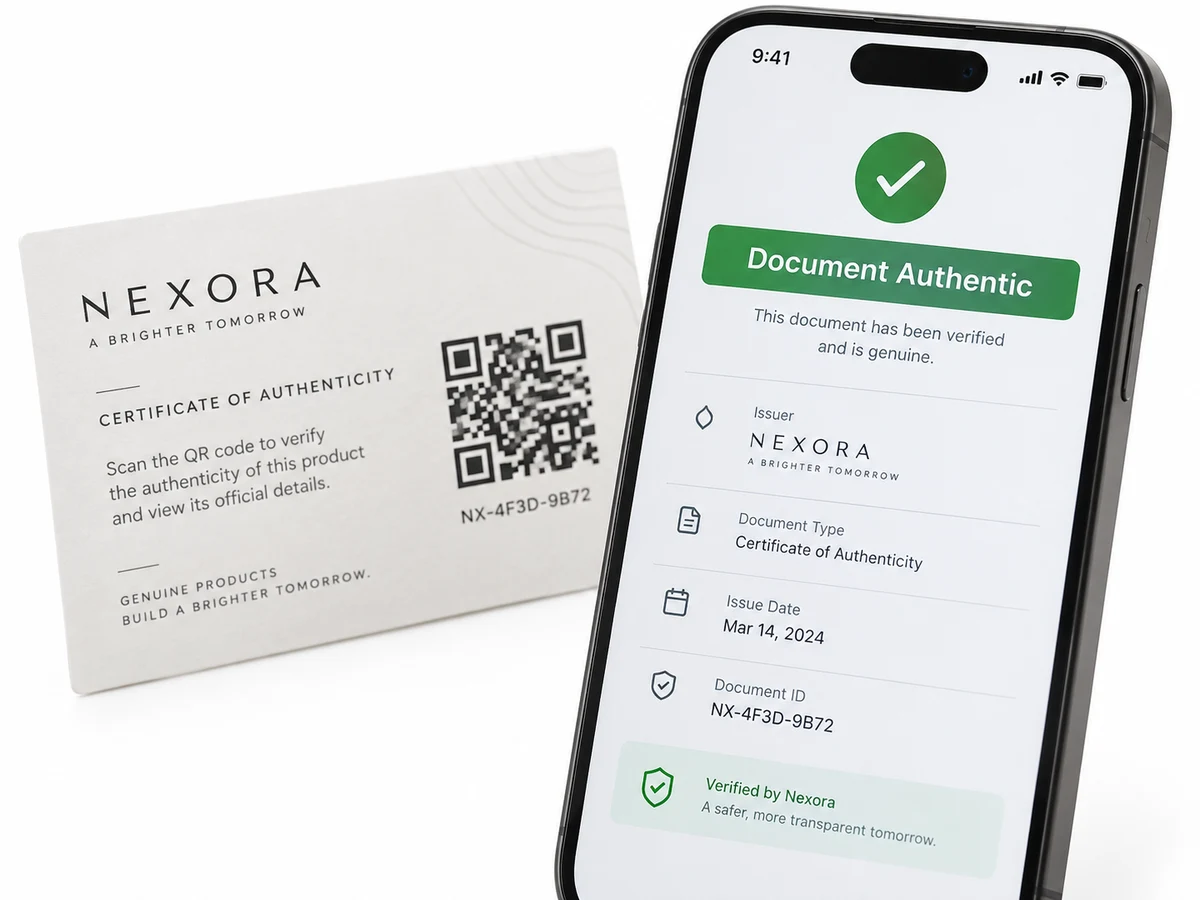
Fake degrees are a billion-rupee industry — employers today verify certificates with phone calls to registrars and weeks of waiting. This project kills the problem with cryptography: universities issue certificates as hash-anchored records on a private Ethereum-style blockchain, and anyone can verify a certificate in seconds by scanning its QR code. No central database to hack, no forged PDFs that pass inspection, no waiting. It's the #2 blockchain student search after voting systems, it's adjacent to (not a duplicate of) our e-voting page so the site owns a second blockchain keyword cluster, and the QR-scan verification demo is instant viva magic.
How it works
- The admin deploys the certificate smart contract on a local Ganache/Hardhat chain.
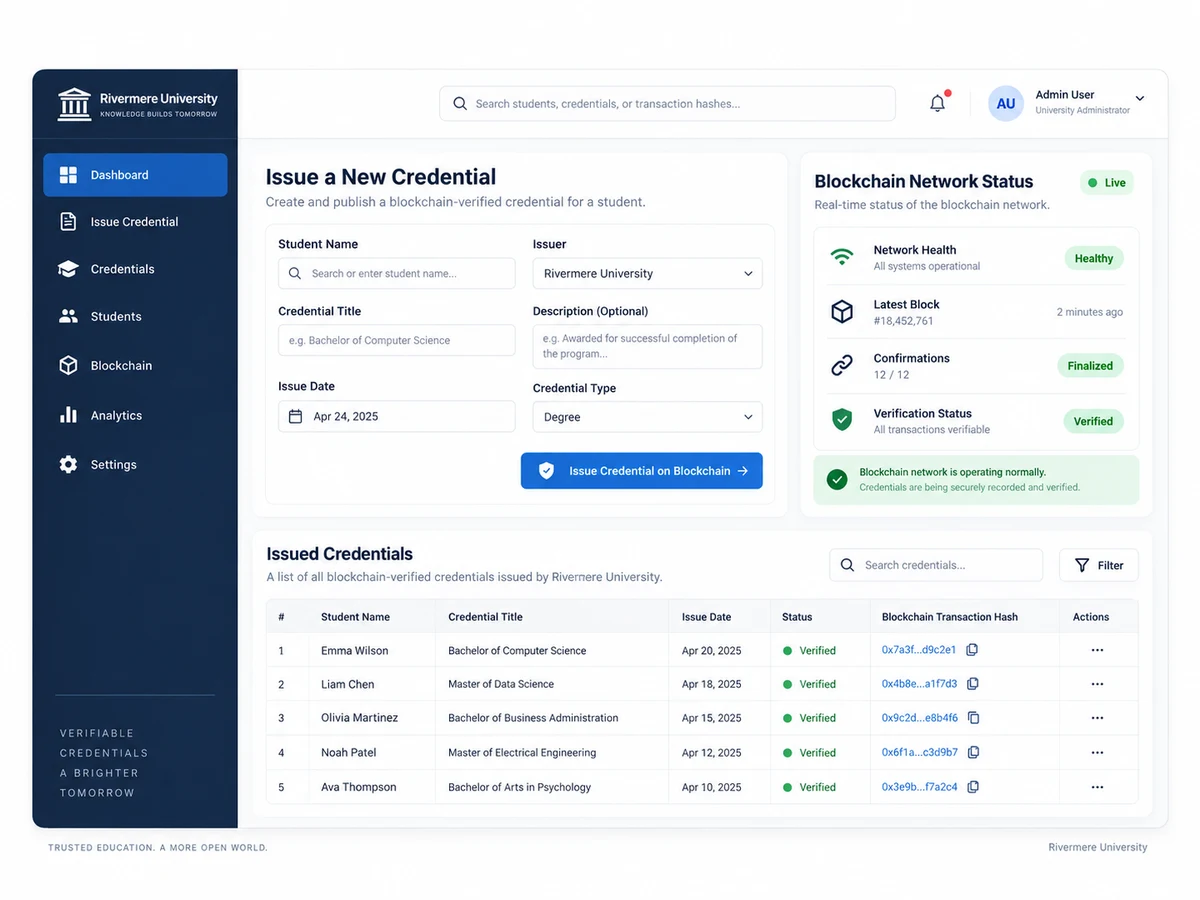
- The university uploads graduate data (CSV); the app hashes each record and stores the hash on-chain, generating a QR code per certificate.
- The graduate's certificate (PDF + printed) carries the QR code linking to its on-chain record.
- An employer scans the QR on the verification portal; the app re-hashes the presented data and compares it with the on-chain hash.
- Match → "Verified" with issue date and university; mismatch or revoked status → clear "Invalid" verdict with reasons.
Project features
- University admin panel: issue certificates anchored on-chain with student details hashed
- QR code printed on each certificate encoding its blockchain record ID
- Public verification portal: scan QR or enter ID → verified/forged verdict in seconds
- Smart-contract revocation: universities can revoke certificates (lost, fraudulent) with on-chain status
- Tamper evidence: any alteration to certificate data breaks the hash match and fails verification
- Bulk issuance via CSV upload for a full graduating batch
- Verification audit log: every check recorded with timestamp
- MetaMask-free demo flow: wallets auto-generated for smooth presentations
What is included
- Full source code: smart contracts, backend, issuer and verifier frontends
- Deployment and setup guide (Ganache/Hardhat step-by-step)
- Project report PDF (synopsis, blockchain concepts, contract design, testing, screenshots)
- Presentation PPT for review/demo day
- Viva Q&A sheet covering blockchain, hashing, smart contracts, and verification security
- Demo script with sample university dataset and printable certificates
Limitations & prerequisites
- Runs on a private/local chain — public-network deployment needs real ETH and is outside demo scope
- Certificate PDFs themselves are off-chain; the chain anchors their hashes (standard industry pattern, explained in the report)
- Identity of issuing universities is admin-managed in the demo, not tied to a national accreditation registry
- Demo-grade UI — production hardening is out of scope
Components & software requirements
- Solidity (certificate smart contract)
- Ganache / Hardhat (local private Ethereum chain)
- Web3.js (blockchain interaction)
- Node.js / Flask backend
- HTML, CSS, JavaScript frontend (issuer + verifier portals)
- QR code generation library
- PDF certificate template generator