
More project photos (2)
The problem
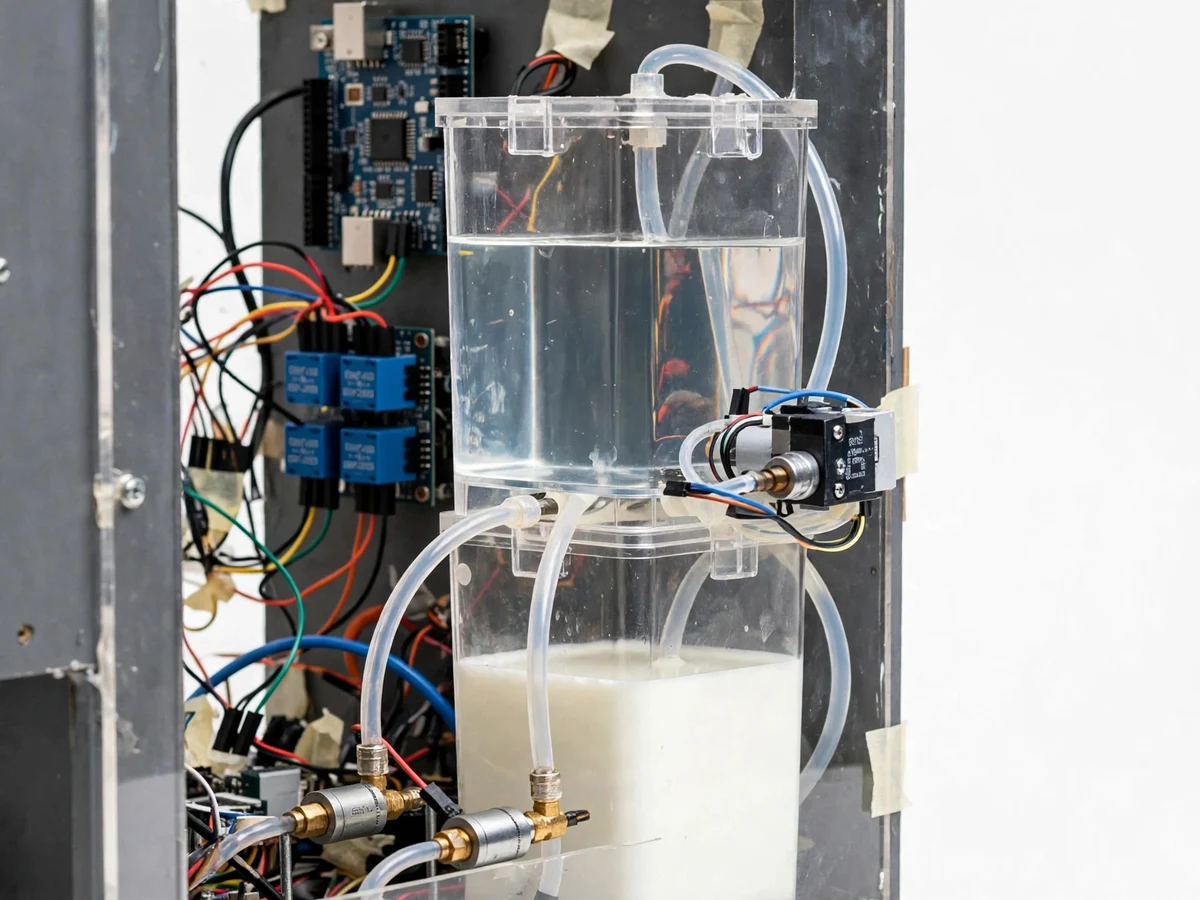
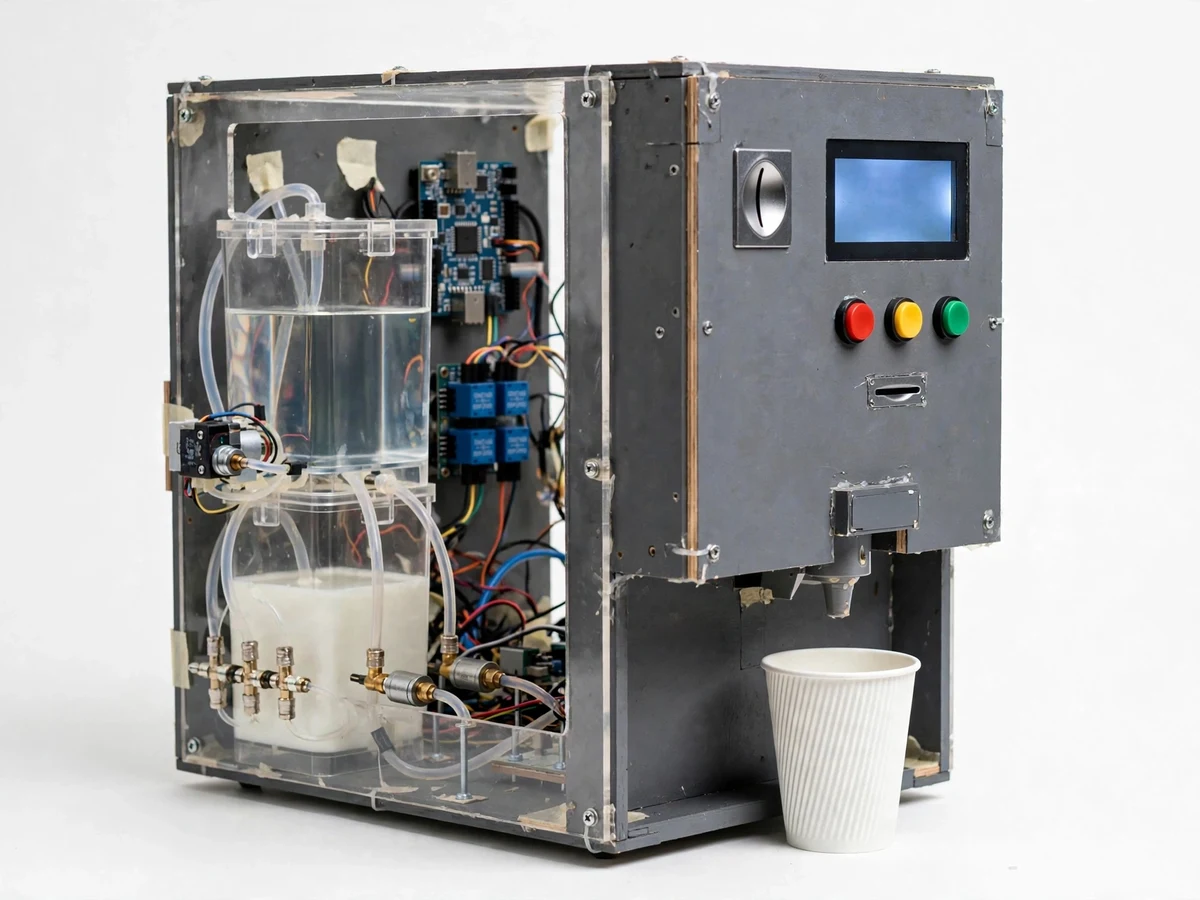
Vending machines are one of the clearest examples of a mechatronic system students can build end to end: payment input, a timed dispensing sequence, fluid handling, level sensing and a sales log all have to work together reliably. Commercial machines hide this machinery; this project makes it visible. A tabletop model dispenses tea on demand — coin or QR payment triggers an Arduino-controlled sequence that runs a 12 V DC pump and solenoid valves for calibrated durations, mixing hot water with milk and tea concentrate into a waiting cup. An ultrasonic cup-presence sensor prevents dispensing without a cup, and float sensors watch tank levels. Every transaction is pushed by an ESP32 to a cloud dashboard, so the owner sees cups sold, revenue and refill alerts — the IoT layer that turns a machine into a manageable business.
How it works
- The buyer inserts a coin or confirms a QR payment; the Arduino registers the credit and arms the dispense cycle.
- The ultrasonic sensor checks for a cup under the nozzle — if none is found, the machine beeps and refunds the state.
- The firmware runs the calibrated sequence: hot-water pump on, milk valve open for its timed share, tea concentrate valve for its share, then a short stir/mix pause.
- The finished cup is signaled with a buzzer and the LCD shows "Enjoy your tea"; the machine returns to idle.
- The ESP32 posts the transaction (timestamp, drink type, amount) to the cloud dashboard, updating cups-sold and revenue counters.
- Float sensors continuously report tank levels; when any tank runs low, the dashboard flags a refill alert and the LCD shows which ingredient is needed.
- The owner views daily sales charts and refill history on the dashboard, demonstrating the complete machine-plus-IoT business loop.
Tech stack:
- Arduino Uno (sequence controller)
- ESP32 (IoT telemetry)
- 12 V DC pump + solenoid valves
- Coin acceptor / QR input
- Ultrasonic + float level sensors
- Cloud dashboard (MQTT/HTTP)
- 16x2 LCD display
- Thermostat heater band
| Parameter | Value |
|---|---|
| Controller | Arduino Uno (ATmega328P) + ESP32 — datasheets |
| Dispense volume | Approximately 150 ml per cup (calibrated, design target) |
| Cycle time | Approximately 45–60 s per cup (expected) |
| Tanks | Water ~2 L, milk ~1 L, concentrate ~500 ml (prototype) |
| Payment | Coin acceptor pulse / QR confirmation (implemented) |
| Telemetry | Sale events + tank levels to cloud dashboard (MQTT) |
| Power | 12 V DC, approximately 5 A peak (design) |
| Cabinet | Approximately 45 cm tabletop model (prototype) |
Project features
- [Calibrated dispensing sequence] Arduino-timed pump and solenoid valve actuation delivers repeatable tea volumes — water, milk and concentrate each dispensed for firmware-set durations.
- [Coin and QR payment input] A coin acceptor (or QR-scan confirmation) unlocks the dispense cycle, demonstrating real payment-gated automation.
- [Cup-presence safety interlock] An ultrasonic sensor confirms a cup is under the nozzle before dispensing; the cycle aborts with an alert if the cup is missing.
- [Ingredient level monitoring] Float sensors in the water, milk and concentrate tanks warn when a refill is due, both on the local LCD and the cloud dashboard.
- [IoT sales dashboard] Every sale is logged by the ESP32 — cups sold, revenue estimate, time of day — visible as live charts for the owner.
- [Temperature hold] A thermostat-controlled heater band keeps the water tank near serving temperature, with the setpoint shown on the display.
- [Hygiene-first fluid path] Food-grade tubing and a documented cleaning-flush procedure in the report address the real operational concern of a beverage machine.
What is included
- Tabletop vending machine cabinet with tanks, pumps and valves fitted
- Arduino + ESP32 electronics (assembled, programmed)
- Cloud sales dashboard setup with refill alerts
- Complete firmware source code with dispense-time calibration guide
- Wiring diagram and fluid-path plumbing guide
- Cleaning and maintenance procedure document
- Project report PDF (background, mechatronics design, firmware, results)
- PPT presentation for final review
- Viva Q&A preparation document (timing control, sensors, IoT telemetry)
Limitations & prerequisites
- This is a tabletop demonstration model, not a food-safety-certified commercial machine — the report states the hygiene and certification limits plainly.
- Dispense volumes are calibrated by timing, so they drift as pump wear or voltage changes; recalibration is a buyer-run procedure documented in the guide.
- The coin acceptor is a basic pulse-type unit; it does not validate counterfeit coins.
- Milk and concentrate need daily refrigeration and cleaning in real use — the report's maintenance section covers this honestly.
- Hot water is held near serving temperature by a simple thermostat band, not a precision boiler.
- Cloud sales logging needs Wi-Fi; the machine still dispenses offline, it just queues the sale record locally.
Frequently Asked Questions
How does the machine know how much tea to dispense?
Each ingredient is dispensed by timed actuation — the pump and valves run for firmware-set durations that were calibrated to deliver approximately 150 ml total. The calibration procedure in the report shows how to re-tune these timings.
What payment methods does it accept?
A pulse-type coin acceptor unlocks the cycle on a valid coin; a QR-scan confirmation mode is also implemented for cashless demo. It is a demonstration payment path, not a certified payment terminal.
What happens if there is no cup?
An ultrasonic sensor checks the dispense bay before every cycle. With no cup detected, the machine aborts, beeps an alert and never runs the pumps — the cup-presence interlock is a core safety feature.
How does the owner track sales?
An ESP32 posts every transaction to a cloud dashboard showing cups sold, estimated revenue and ingredient levels, with refill alerts when a tank runs low.
Is the tea safe to drink from a student prototype?
The fluid path uses food-grade tubing and a documented cleaning-flush procedure, but the machine is a demonstration model, not a certified food appliance — the report states this limit explicitly.
Is this project suitable for a final-year project?
Yes — for Electronics, Electrical and IoT programs. It combines embedded sequencing, fluid mechatronics, payment input and cloud telemetry in one demonstrable build. Suitable for B.E./B.Tech final-year projects in Electronics, Electrical and IoT.
Components & software requirements
- Arduino Uno (sequence controller)
- ESP32 (IoT telemetry)
- 12 V DC pump + solenoid valves
- Coin acceptor / QR input
- Ultrasonic + float level sensors
- Cloud dashboard (MQTT/HTTP)
- 16x2 LCD display
- Thermostat heater band
Delivery information
Built-to-order project. Delivery timeline is shared after order confirmation based on current queue.
Support terms
Complete documentation, setup guide, and viva preparation included. Support for setup and explanation provided.